
Sponsored
Search results
-
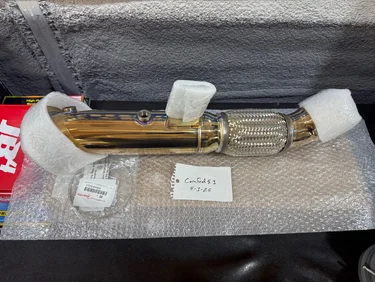
Kenji “Race” down-pipe
Oh you weren't here for the drama. A90 shop and armytrix had a falling out and so a90shop started making shit up about armytrix dp's not working. I'm personally at 23k miles with a mixture of locked DME and MHD tune (witb cat monitoring ON) with no CEL...- i3igpete
- Post #12
- Forum: Engine, Exhaust, Bolt-Ons, Transmission, Tuning
-
Kenji “Race” down-pipe
Could you please link to where you saw this, so that we can shut it down from the source? So that idiot doesn't keep spreading misinformation.- i3igpete
- Post #10
- Forum: Engine, Exhaust, Bolt-Ons, Transmission, Tuning
-

Designing FT-1 inspired wing- Looking to see if there is demand as well as suggestions for improvement
Unless the wing flies off, the force is never "lost". But yes, your intuition is right that wing setback affects the load distribution applied to each bolt.- i3igpete
- Post #107
- Forum: Cosmetic Mods (Interior/Exterior/Lighting)
-
-
Battery issue
Wild, i didnt know the alarm battery was built into the siren. I guess it makes sense, the regular battery is easily accessible for thieves to disconnect. The siren is in a pain in the ass location- i3igpete
- Post #19
- Forum: General Supra Topics
-
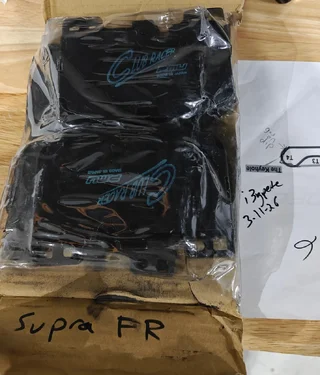
FS: Project mu Club Racer front brake pads (6 cyl)
Price drop- i3igpete
- Post #4
- Forum: Suspension, Brakes, Spacers, Chassis
-
Designing FT-1 inspired wing- Looking to see if there is demand as well as suggestions for improvement
Thats the tricky thing, can't do a stick-on angle aluminum gurney for a 3d wing. You need to either mold the gurney to the wing shape, or find something sufficiently flexible- i3igpete
- Post #92
- Forum: Cosmetic Mods (Interior/Exterior/Lighting)
-
Designing FT-1 inspired wing- Looking to see if there is demand as well as suggestions for improvement
I believe mario is trying to organize a group trip at the a2 tunnel in the near future as well, on the occams discord.- i3igpete
- Post #89
- Forum: Cosmetic Mods (Interior/Exterior/Lighting)
-
Designing FT-1 inspired wing- Looking to see if there is demand as well as suggestions for improvement
Agree with the gurney flap placement, i missed that earlier. though that should be obvious once you run the cfd - the surface pressure would be really low after the gurney, so you might as well cut it off- i3igpete
- Post #86
- Forum: Cosmetic Mods (Interior/Exterior/Lighting)
-
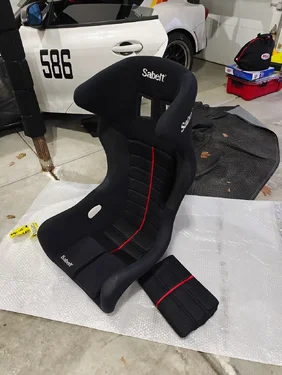
Sold: FS: Sabelt Taurus XL (Max) FIA racing seat
No tears in the fabric but does have scratches on the back (some, pictured) and bottom (lots, not pictured). FIA rating valid until 2028 - still has two more years of eligibility for racing, or can be used for HPDE indefinitely. Seat bottom cushion and leg pads have been changed out to "Confor"...- i3igpete
- Thread
- Replies: 1
- Forum: Interior Parts
-
What did you do to your Supra today?
Sparco circuit ii is a confirmed fit with pci sliders. The shoulder bolster barely touches the door card, but you can slide a piece of paper between. There is a finger gap between the seat and the tunnel so in theory I could shift it over, but I don't really feel like it.- i3igpete
- Post #19,617
- Forum: General Supra Topics
-
Designing FT-1 inspired wing- Looking to see if there is demand as well as suggestions for improvement
In general, i would avoid making CFD claims that you have run yourself, unless you have a academic/professional background in it. You will get torn apart by real aero experts (which I am not). CFD analysis is typically done in steps. 1. Standalone wing. Use a wing with a lot of published data...- i3igpete
- Post #81
- Forum: Cosmetic Mods (Interior/Exterior/Lighting)
-
DivineDrive.co Sleek Tow Hook with Cover - Input & Interest
Actually now that I think about it, including a set of washers/shims would do the trick. Looks like the thread pitch is 3.175mm, so you'd need to include 2 shims of 1mm thickness, so people could dial in 120-ish deg of tightening torque- i3igpete
- Post #11
- Forum: Cosmetic Mods (Interior/Exterior/Lighting)
-
DivineDrive.co Cold Air Intake Bumper Duct GROUP BUY!
From the perrin website: Looks like perrin uses 6061. If they were made out of something like 7075, it would double the strength and make it comparable to something like the mild steel that's used in roll cages- i3igpete
- Post #166
- Forum: B58 6-Cyl Engine, Exhaust, Drivetrain, Bolt-Ons
-
DivineDrive.co Sleek Tow Hook with Cover - Input & Interest
My other thought was using a jamnut. But i believe the tow hook hole is not a standard thread (Google says it's called a knuckle thread), so I'm not sure if such a nut exists off-the-shelf.- i3igpete
- Post #4
- Forum: Cosmetic Mods (Interior/Exterior/Lighting)
-
DivineDrive.co Sleek Tow Hook with Cover - Input & Interest
Your hook design is asymmetric. How will you ensure that the tow hook is clocked correctly to meet up with the cover, without being over torqued or completely loose? Unlike flat bar stock designs that would need to rotate an additional 180 deg to be flat again, yours would need to rotate another...- i3igpete
- Post #2
- Forum: Cosmetic Mods (Interior/Exterior/Lighting)
-
Fortune Auto 510 Coilover Review
Elite ball knowledge. Can't wait to try it.- i3igpete
- Post #89
- Forum: Suspension | Chassis | Brakes