Sponsored

Help Me Diagnose a Suspension Creak

razorlab

Well-Known Member
First Name
Bryan
Joined
Oct 2, 2021
Threads
29
Messages
8,568
Reaction score
16,798
Location
Hudson Valley, NY
Car(s)
Not a Corvette.
Rubber bushings - they need to be at their normal operating height, which is basically the center of their normal travel, when tightened. So that when the suspensions moving a little bit up and down, the rubber flexes and works as intended. With them tightened in the air, the suspension is at full droop, and then when the car's back on the ground they are already flexed quite hard in one direction, and even more so when you hit a bump.

You'll want to do the other side soon, or you can ruin the bushing if you haven't already.

I suppose the diagnosing part of the thread assumed you had done that correctly. Now you know.
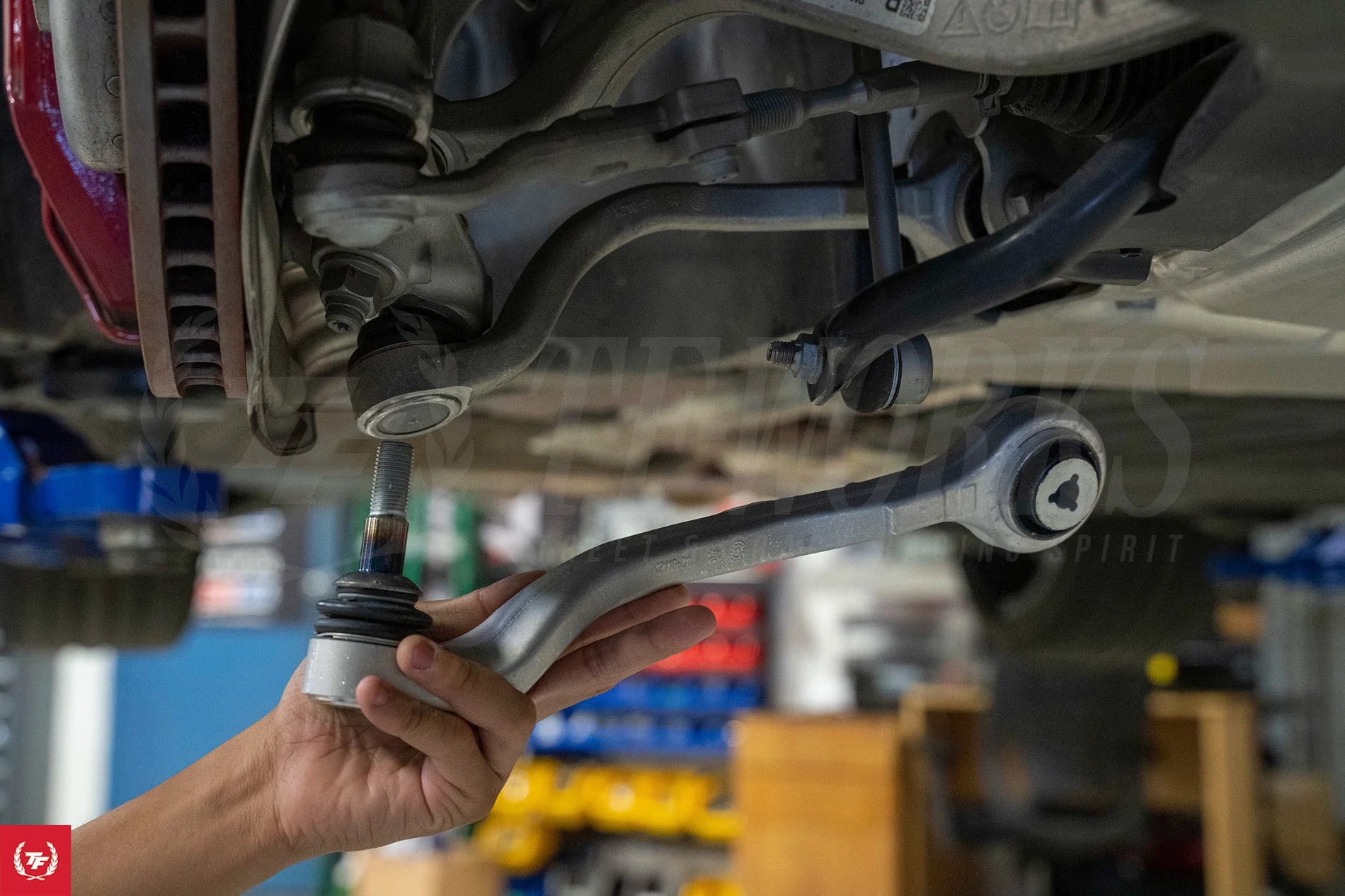
The connection between the LCA and the hub is metal to metal that only seats one way. I think maybe the bolt was loose and needed proper torquing instead.

bent2.webp
Sponsored


tracer bullet

Well-Known Member
First Name
Greg
Joined
Jan 15, 2025
Threads
1
Messages
278
Reaction score
177
Location
MN
Car(s)
2025 BMW Z4 M40 6spd
The connection between the LCA and the hub is metal to metal that only seats one way. I think maybe the bolt was loose and needed proper torquing instead.
On 2nd thought, yes, I'd agree. I had in mind the other end, but he said specifically the re-tightening was indeed LCA to hub. If the LCA wasn't loosened at the chassis side (the end with the bushing), then never mind. It's a frequently misunderstood thing to replace the arm and tighten when drooped, but apparently not in this particular case. Apologies.
 

razorlab

Well-Known Member
First Name
Bryan
Joined
Oct 2, 2021
Threads
29
Messages
8,568
Reaction score
16,798
Location
Hudson Valley, NY
Car(s)
Not a Corvette.
On 2nd thought, yes, I'd agree. I had in mind the other end, but he said specifically the re-tightening was indeed LCA to hub. If the LCA wasn't loosened at the chassis side (the end with the bushing), then never mind. It's a frequently misunderstood thing to replace the arm and tighten when drooped, but apparently not in this particular case. Apologies.
It's the same with the chassis side, metal to metal and the bolt slips through straight. Nothing to bind.
 

tracer bullet

Well-Known Member
First Name
Greg
Joined
Jan 15, 2025
Threads
1
Messages
278
Reaction score
177
Location
MN
Car(s)
2025 BMW Z4 M40 6spd
It's the same with the chassis side, metal to metal and the bolt slips through straight. Nothing to bind.
I'll assume you're right and stand corrected, again. I will say that's highly unusual for a BMW, though. For the factory stuff with bushings, you basically always measure the distance from the center of the wheel to the fender lip, so you can replicate it with a jack later on when tightening control arms at the frame. 1 series, X's, 3 series, etc. The bolt slips through, but when torqued, the flanges it goes through in the subframe squeeze onto the metal center of the bushing and hold it tightly in place. It's loose until torqued, then held in place at whatever angle it was at when it was torqued. Aftermarket parts with bearings not included of course.

"Typically", for BMW, anyhow. I'm guessing you know all this and maybe the Supra is indeed different, but in the BMW world this one gets done at ride height where it connects to the chassis. Knuckle can be done anytime.
 

razorlab

Well-Known Member
First Name
Bryan
Joined
Oct 2, 2021
Threads
29
Messages
8,568
Reaction score
16,798
Location
Hudson Valley, NY
Car(s)
Not a Corvette.
I'll assume you're right and stand corrected, again. I will say that's highly unusual for a BMW, though. For the factory stuff with bushings, you basically always measure the distance from the center of the wheel to the fender lip, so you can replicate it with a jack later on when tightening control arms at the frame. 1 series, X's, 3 series, etc. The bolt slips through, but when torqued, the flanges it goes through in the subframe squeeze onto the metal center of the bushing and hold it tightly in place. It's loose until torqued, then held in place at whatever angle it was at when it was torqued. Aftermarket parts with bearings not included of course.

"Typically", for BMW, anyhow. I'm guessing you know all this and maybe the Supra is indeed different, but in the BMW world this one gets done at ride height where it connects to the chassis. Knuckle can be done anytime.
Actually, I think you are correct, it's been a long time since I had OEM LCA's.
Sponsored


Top