
Sponsored
Toyota Supra Break In Period
- Thread starter Ryanthetemp
- Start date
- Watchers 45



turbopk
Well-Known Member
- First Name
- Pk
- Joined
- Apr 28, 2021
- Threads
- 1
- Messages
- 79
- Reaction score
- 51
- Location
- Phoenix AZ USA
- Car(s)
- 2018 ford edge(DD)
BOO! Drive it like you stole it! JK! 
Andrew4Supra
Well-Known Member
- First Name
- Andrew
- Joined
- Jan 20, 2021
- Threads
- 100
- Messages
- 2,012
- Reaction score
- 3,553
- Location
- Powell, Ohio
- Car(s)
- 2021 Supra 3.0 / 2018 Mercedes GLC43 / 2016 VW GTI
In reality ... As long as the car is warmed up (well into the operating temperature / dash gauge) ... the car will be just fine with some spirited runs to redline from time to time (prior to 1200 miles). Just allow the car and its turbo to cool down (idling for a few minutes or so) prior to shutting the car off.
turbopk
Well-Known Member
- First Name
- Pk
- Joined
- Apr 28, 2021
- Threads
- 1
- Messages
- 79
- Reaction score
- 51
- Location
- Phoenix AZ USA
- Car(s)
- 2018 ford edge(DD)
I remember when it was cool to get a turbo timer!! lolIn reality ... As long as the car is warmed up (well into the operating temperature / dash gauge) ... the car will be just fine with some spirited runs to redline from time to time (prior to 1200 miles). Just allow the car and its turbo to cool down (idling for a few minutes or so) prior to shutting the car off.
I had one on all my 90's turbo cars, people would always tell me bro you left your car running! lol
ELSUPRA
Member
- First Name
- ELSUPRA
- Joined
- May 5, 2021
- Threads
- 3
- Messages
- 20
- Reaction score
- 46
- Location
- Pebble Beach, CA
- Website
- www.instagram.com
- Car(s)
- 2021 Toyota GR Supra Premium 3.0
Had the car for about 6 months 800 miles currently of WOT on full bolts ons, check oil level every time i drive it no issues. Done about 5 roll races on freeway vs 5.0 mustang and a nissan GTR.
deborahjlinares
New Member
- First Name
- Deborah
- Joined
- May 8, 2021
- Threads
- 0
- Messages
- 1
- Reaction score
- 1
- Location
- New York
- Website
- jdmsportclassics.com
- Car(s)
- Nissan Skyline
Spring daffodils have popped up, good driving weather has returned to Michigan, and we've swapped the winter tires on our long-term Supra for its original equipment Michelin Pilot Super Sport summer rubber. We're now back to enjoying this raucous two-seater the way Toyota intended. If only the winter months with it had been this enjoyable. at jdmsportclassics.
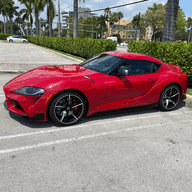
As much as we love our joint-venture Toyota-BMW sports car, it would have been much happier wintering somewhere warmer and sunnier than in the snowy Midwest. (The same goes for most of us, which is why we stole away for a quick trip to Florida to take some photos.) We have no issues with driving sports cars in winter; we've always done so with our long-termer vehicles after fitting them with winter tires, most recently with a Corvette, a Porsche, a Miata, and a Mustang. But those cars never gave us the kind of trouble that we experienced with our Supra, which largely can be explained in two words: ground clearance, of which the Supra 3.0 has but 4.5 inches.
As much as we love our joint-venture Toyota-BMW sports car, it would have been much happier wintering somewhere warmer and sunnier than in the snowy Midwest. (The same goes for most of us, which is why we stole away for a quick trip to Florida to take some photos.) We have no issues with driving sports cars in winter; we've always done so with our long-termer vehicles after fitting them with winter tires, most recently with a Corvette, a Porsche, a Miata, and a Mustang. But those cars never gave us the kind of trouble that we experienced with our Supra, which largely can be explained in two words: ground clearance, of which the Supra 3.0 has but 4.5 inches.
bhamvett
Active Member
Totally wrong. Per my Supra tech and Toyota, NO full throttle or RPM's above 4500 for 1200 miles. Period. There is some very bad information on this thread. Read the OWNERS MANUAL.No, boost is good for engine break in. Personally I try to avoid redline, but you should be getting into boost, medium and full throttle are good, along with engine braking.
https://www.supramkv.com/threads/low-oil-poll-with-break-in-data.8446/
suicidaleggroll
Well-Known Member
Yes, I know what Toyota “recommends”, that’s why OP posted this thread. Did you read the link I posted, or did you just jump in here to feel superior?Totally wrong. Per my Supra tech and Toyota, NO full throttle or RPM's above 4500 for 1200 miles. Period. There is some very bad information on this thread. Read the OWNERS MANUAL.
When every aircraft engine builder, automotive engine builder, and racing team recommends breaking in an engine the same way for very explicit reasons, and Toyota recommends the exact opposite, you don’t take it at face value, you ask WHY?
Why do engine builders recommend what they recommend? What specific reasons do they give to back that recommendation? What do the oil burning poll results say?
Why would Toyota recommend the opposite? Is the B58 somehow completely different than every other piston engine designed in the last 100 years, or might there be another factor influencing their recommendation?
I’m an engineer, I’ve written user manuals before. After passing through PR, marketing, and legal, what ends up being sent to the customer looks nothing like what I wrote. You have to take everything the OEM recommends with a big grain of salt, because all of those recommendations are written through a lens of avoiding lawsuits and liability.
It’s the same deal with the shitty 0W20 oil recommendation. That’s an EPA/marketing recommendation, not an engineering recommendation.
The OEM throws out some terrible break-in advice to avoid lawsuits, and a horrible oil recommendation to optimize efficiency, both of which will greatly increase the likelihood of the engine burning oil, and then they throw out an insanely high “normal” limit on how much oil the engine might burn to limit their liability. It’s standard practice for all car manufacturers.

RWhiz
Well-Known Member
Bring your car up to temp with easy driving, then drive in a variety of ways, high speed high reves, engine braking, low speed low revs, etc.
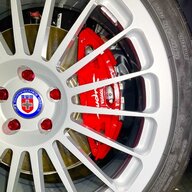
I have a 2021 with 2300 miles and zero oil consumption.
I have a 2021 with 2300 miles and zero oil consumption.
Loco38SUP
Well-Known Member
Amen to that brother.Yes, I know what Toyota “recommends”, that’s why OP posted this thread. Did you read the link I posted, or did you just jump in here to feel superior?
When every aircraft engine builder, automotive engine builder, and racing team recommends breaking in an engine the same way for very explicit reasons, and Toyota recommends the exact opposite, you don’t take it at face value, you ask WHY?
Why do engine builders recommend what they recommend? What specific reasons do they give to back that recommendation? What do the oil burning poll results say?
Why would Toyota recommend the opposite? Is the B58 somehow completely different than every other piston engine designed in the last 100 years, or might there be another factor influencing their recommendation?
I’m an engineer, I’ve written user manuals before. After passing through PR, marketing, and legal, what ends up being sent to the customer looks nothing like what I wrote. You have to take everything the OEM recommends with a big grain of salt, because all of those recommendations are written through a lens of avoiding lawsuits and liability.
It’s the same deal with the shitty 0W20 oil recommendation. That’s an EPA/marketing recommendation, not an engineering recommendation.
The OEM throws out some terrible break-in advice to avoid lawsuits, and a horrible oil recommendation to optimize efficiency, both of which will greatly increase the likelihood of the engine burning oil, and then they throw out an insanely high “normal” limit on how much oil the engine might burn to limit their liability. It’s standard practice for all car manufacturers.

-RJM
RWhiz
Well-Known Member
To your point, Suicidaleggroll, years ago my ex wife bought herself a Porsche Boxster when the prices crashed due to the IMS bearing failures. If an owner followed Porsche’s guidelines you would probably have that issue. Different oil, better OCI, and proper Porsche driving habits lead to equals a healthy IMS.

polaris
Well-Known Member
For the first 1200 miles, I would let it warm up and give it some ass, but would do my best to keep it below ~75% throttle and 4500 RPM. I let it get above 4500 RPM by accident a few times but it was never under heavy load and it was never for too long, I don't see any issues that'll arise from that. You don't have to baby it but definitely loosely follow the manual.
I did my first launch at 1201 miles
I did my first launch at 1201 miles
kawakibi
Well-Known Member
lolI did my first launch at 1201 miles
bhamvett
Active Member
I am glad you are a engineer. I will take the advice of my Supra technician, who also builds race cars and has worked on pit crews for professional race teams. I am also the service manager at a Toyota dealership. I have access to information that the general public does not. I understand about general liability. I also understand warranties. To each his own.Yes, I know what Toyota “recommends”, that’s why OP posted this thread. Did you read the link I posted, or did you just jump in here to feel superior?
When every aircraft engine builder, automotive engine builder, and racing team recommends breaking in an engine the same way for very explicit reasons, and Toyota recommends the exact opposite, you don’t take it at face value, you ask WHY?
Why do engine builders recommend what they recommend? What specific reasons do they give to back that recommendation? What do the oil burning poll results say?
Why would Toyota recommend the opposite? Is the B58 somehow completely different than every other piston engine designed in the last 100 years, or might there be another factor influencing their recommendation?
I’m an engineer, I’ve written user manuals before. After passing through PR, marketing, and legal, what ends up being sent to the customer looks nothing like what I wrote. You have to take everything the OEM recommends with a big grain of salt, because all of those recommendations are written through a lens of avoiding lawsuits and liability.
It’s the same deal with the shitty 0W20 oil recommendation. That’s an EPA/marketing recommendation, not an engineering recommendation.
The OEM throws out some terrible break-in advice to avoid lawsuits, and a horrible oil recommendation to optimize efficiency, both of which will greatly increase the likelihood of the engine burning oil, and then they throw out an insanely high “normal” limit on how much oil the engine might burn to limit their liability. It’s standard practice for all car manufacturers.
Thanks
Sponsored


