Sponsored

DIY’d a manifold heat shield & intake snorkel.

racebuild

Well-Known Member
Joined
Jul 14, 2023
Threads
1
Messages
241
Reaction score
289
Location
USA
Car(s)
BMW
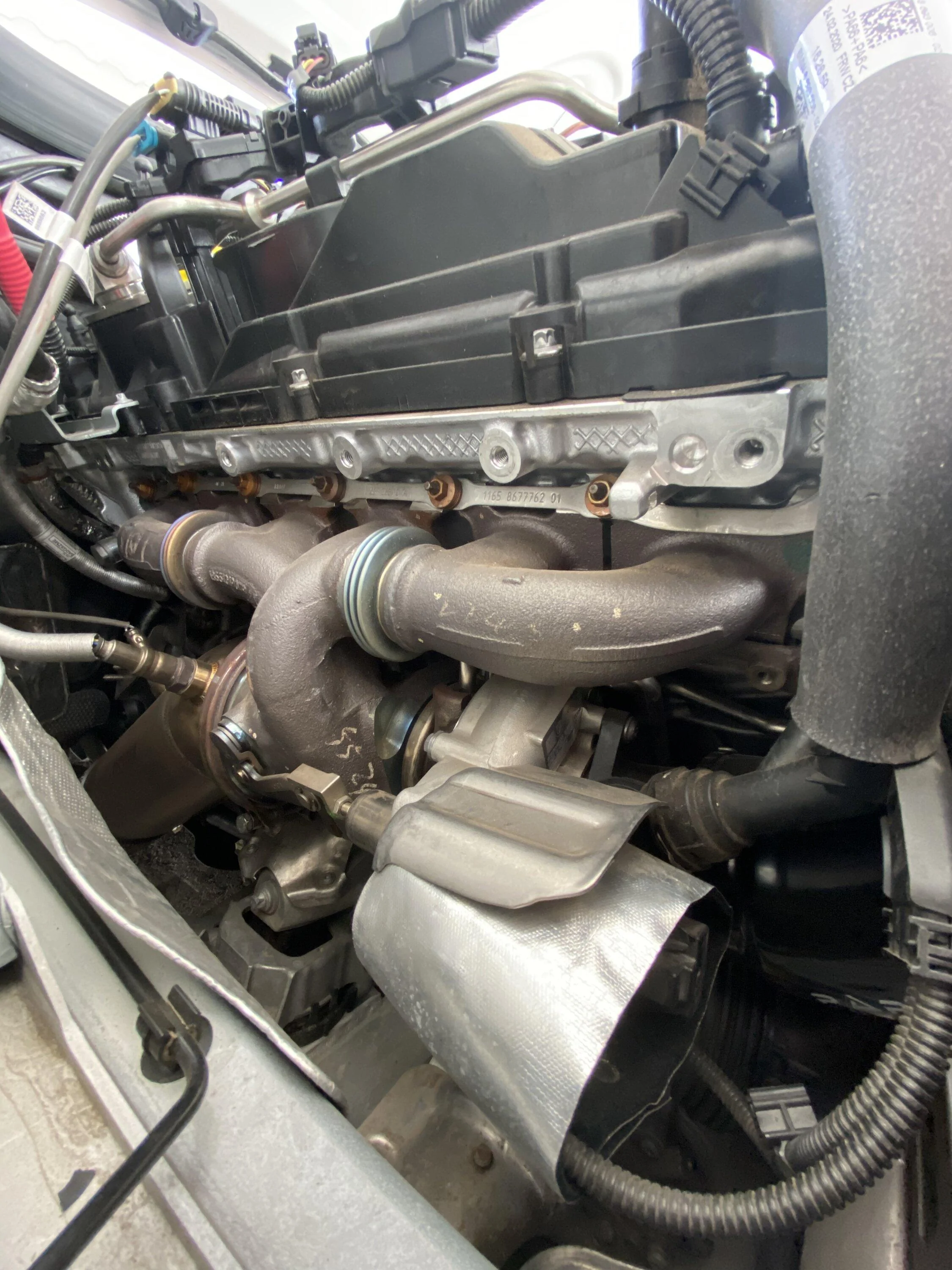
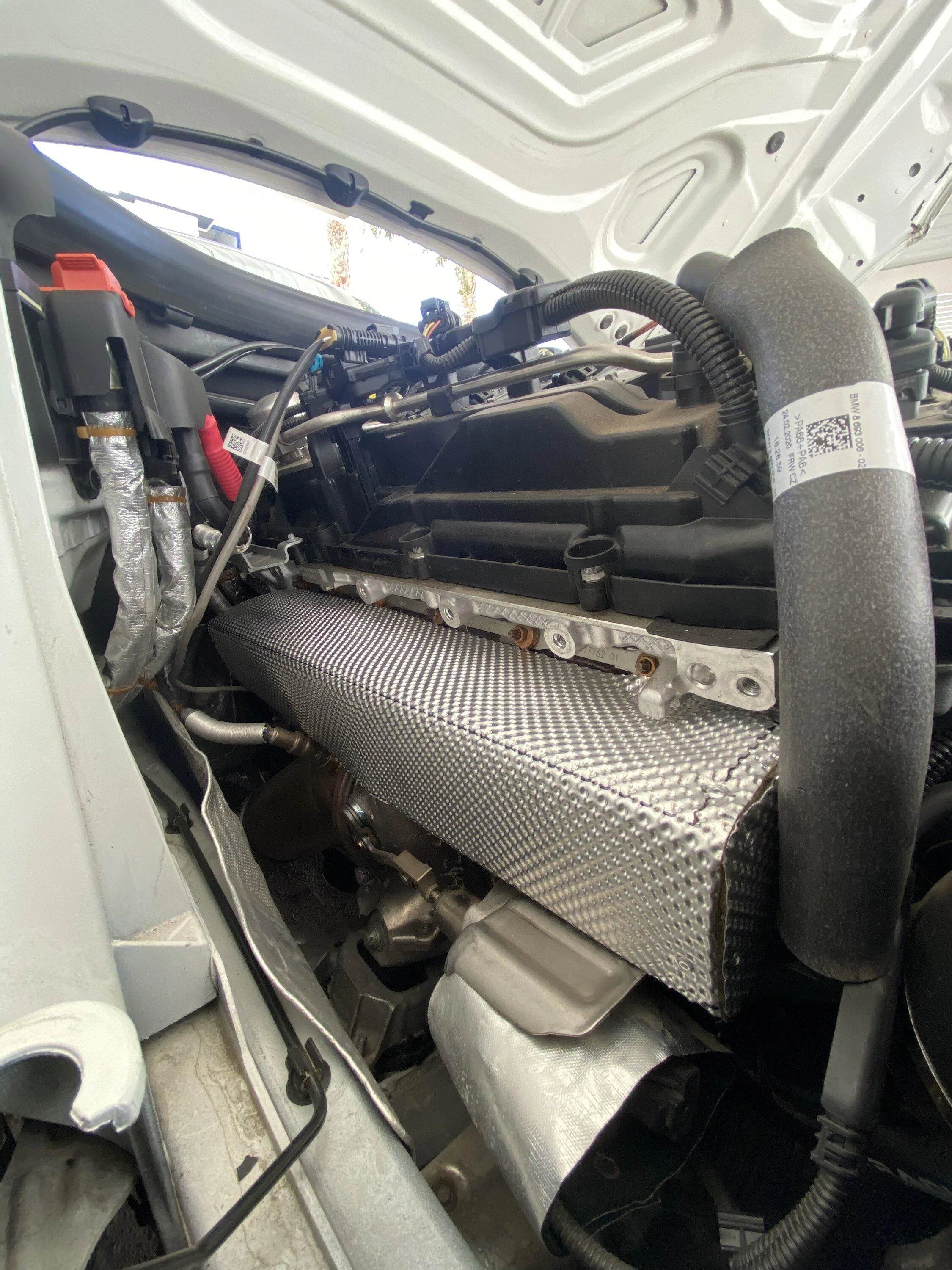
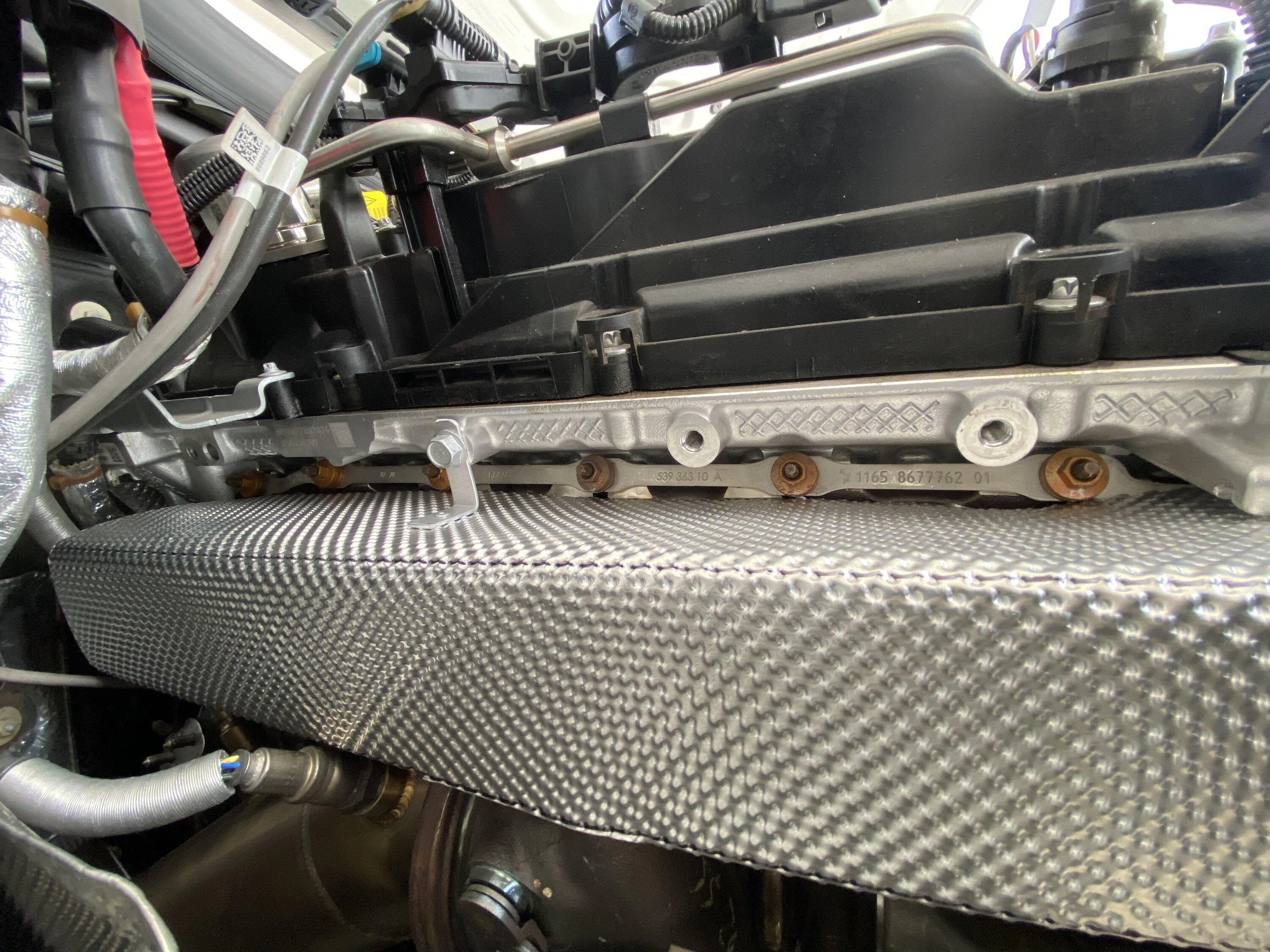
Heat management is a must for turbo powered engines and we were looking for a heat shield that would keep the heat away from the turbo compressor housing, didn’t see one on the market so @suptj & I made one.

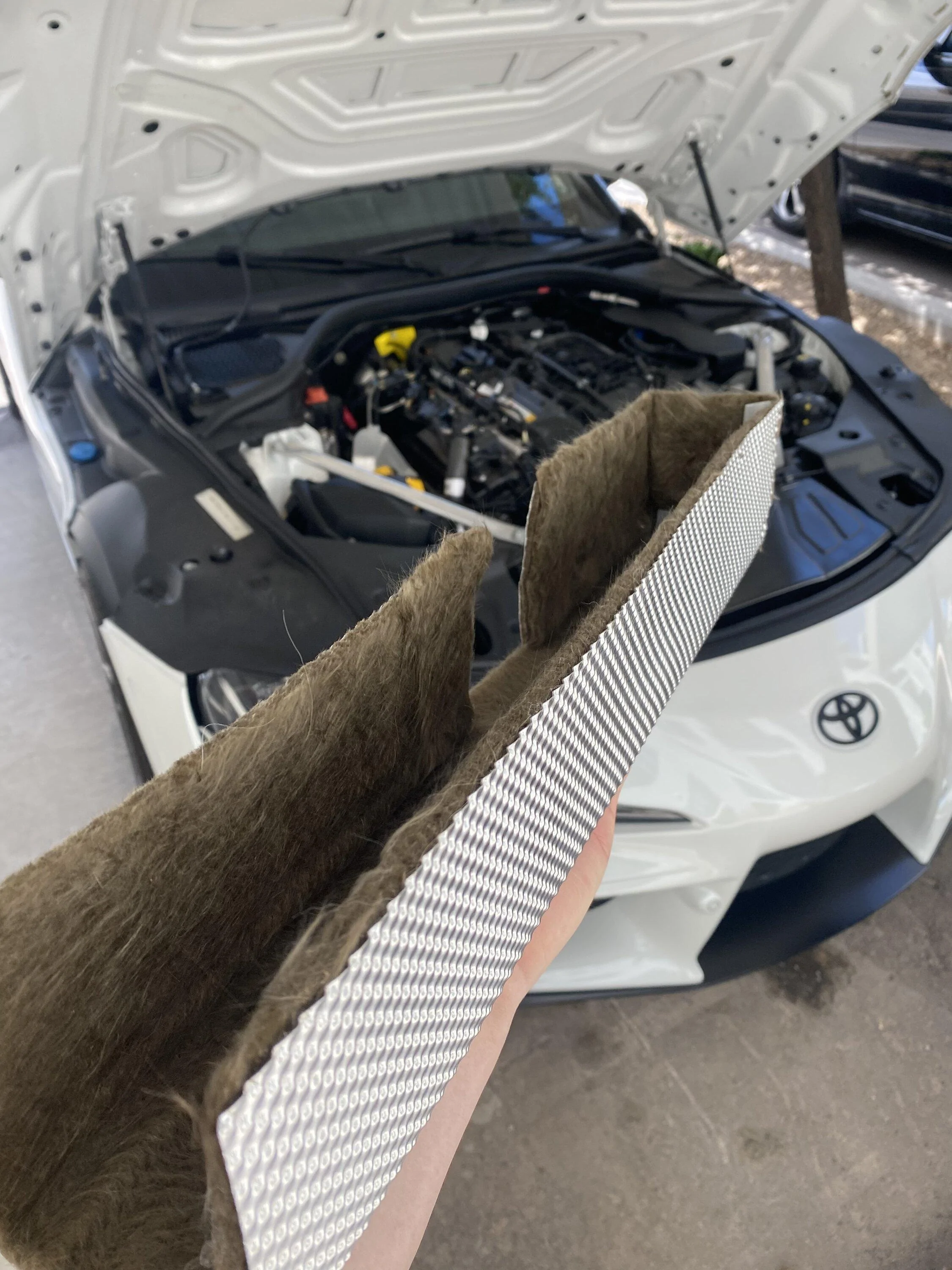
The heat shield runs full length and is butt up against the cylinder head on top and bottom, it also separates the manifold/compressor housing/turbo inlet.

Heat shield is doing a great job at insulating the heat, after a spirited drive we were still able to touch the heat shield with our hands.

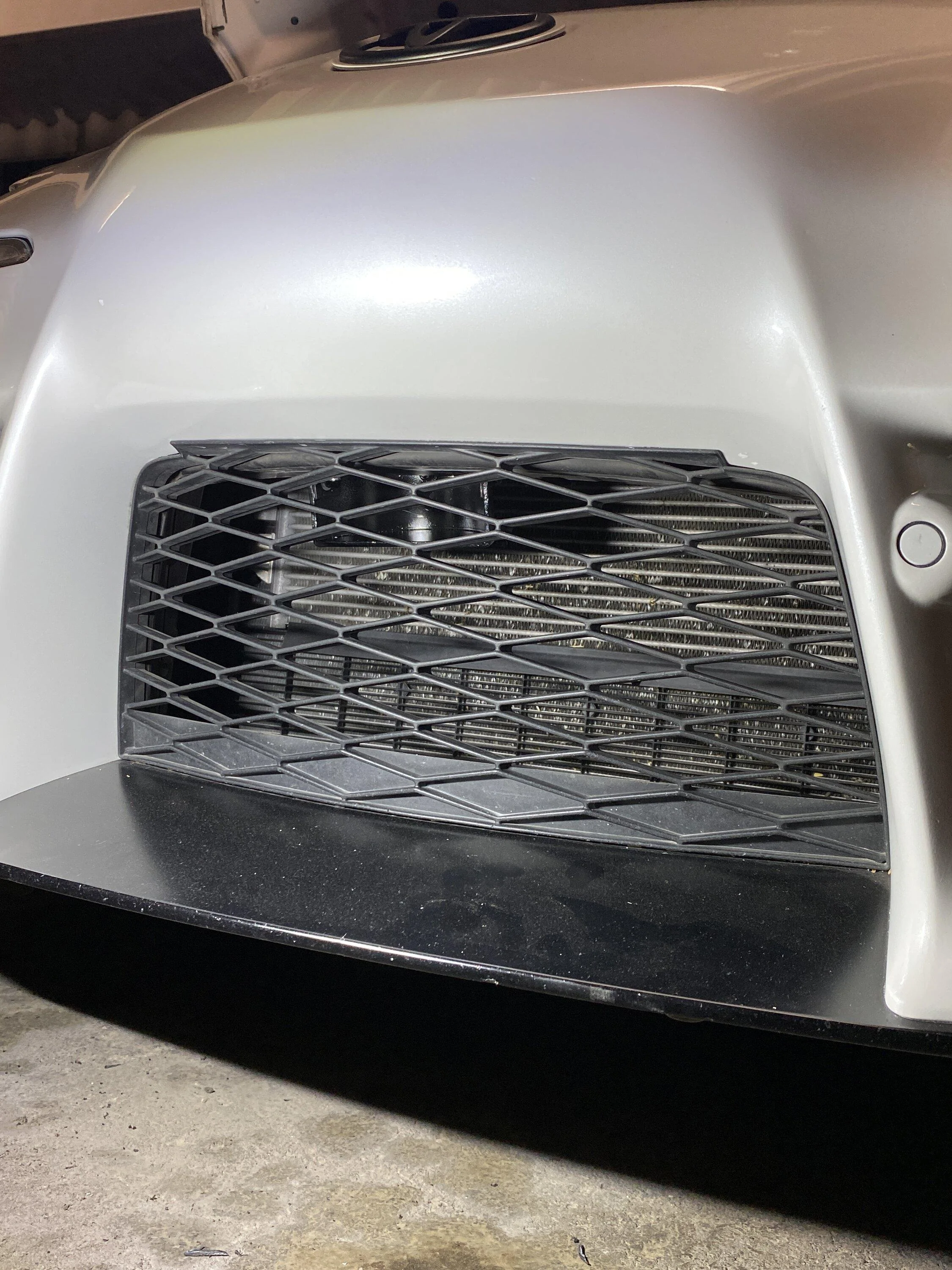
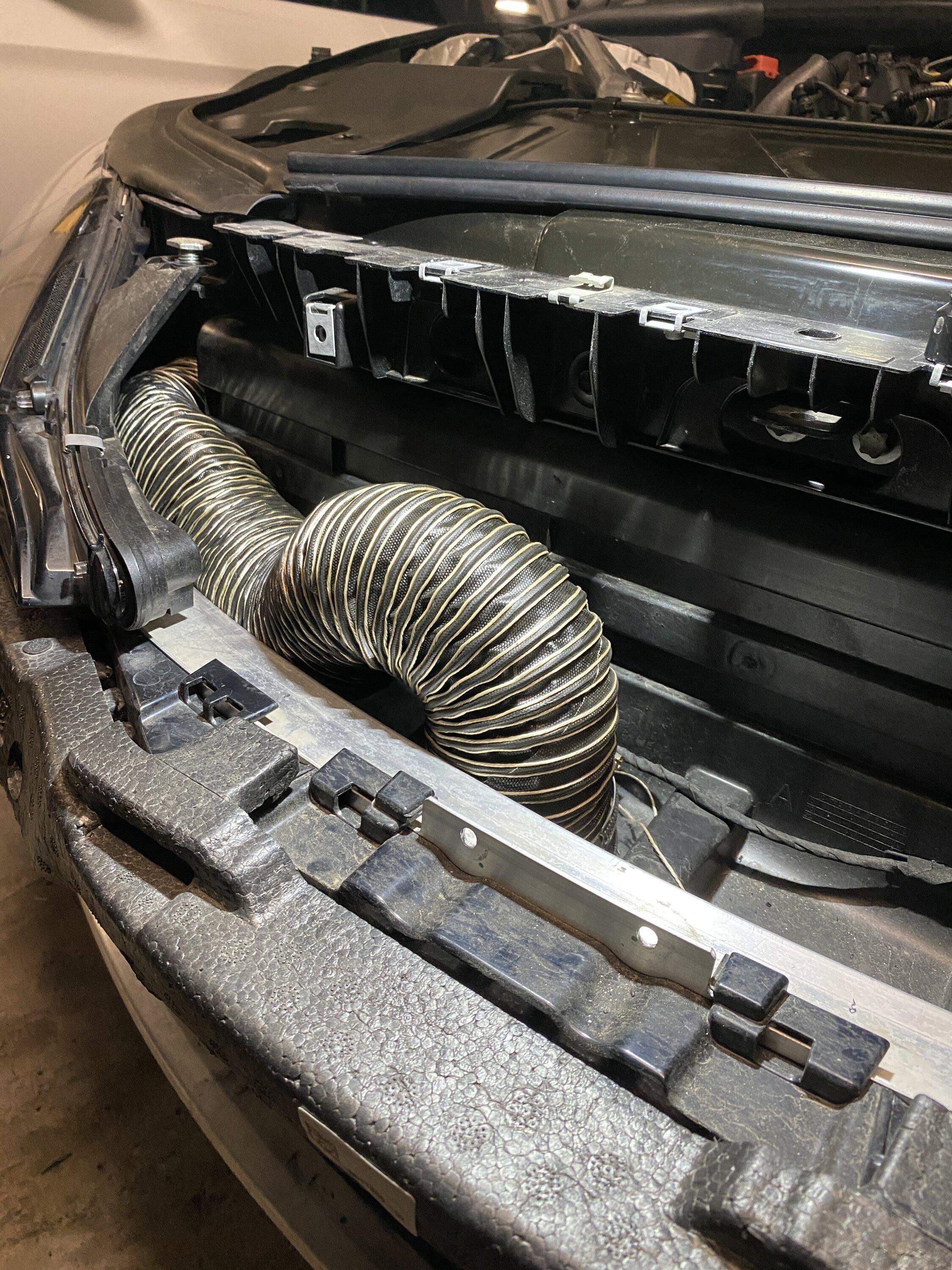
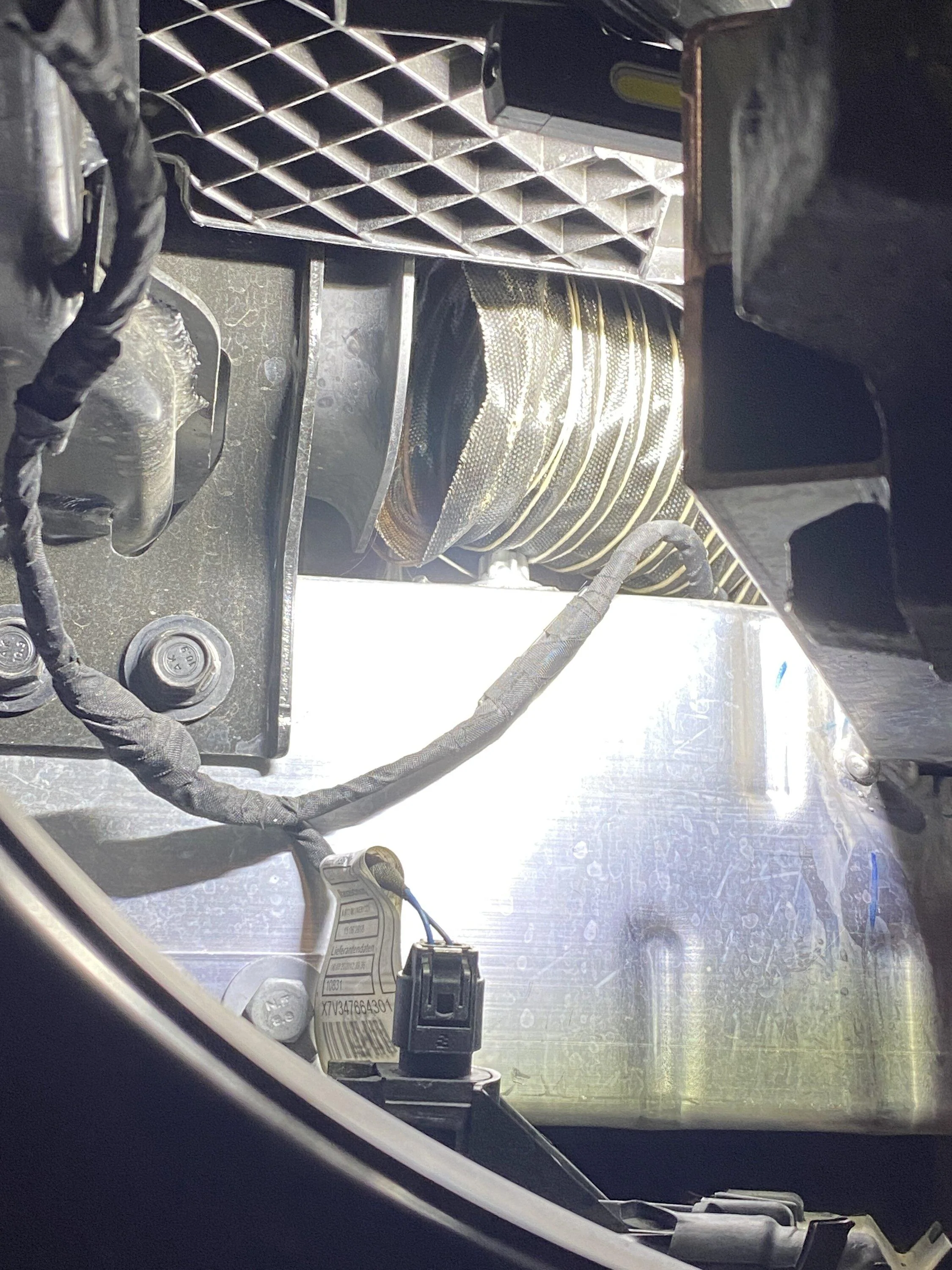
We also made a ram air style intake snorkel to direct air towards the factory air box inlet.

With both mods combined the logs showed over a 10F drop in IAT.

Before heat shield/snorkel: Ambient +23F
After heat shield/snorkel: Ambient +11F

Our ambient here in AZ is an average of 100F during the summer. To keep testing consistent every time we go on a run to log, we cruise on the freeway until the IATs have dropped and stabilized which usually takes about 2 miles at speed.

@suptj can chime in here with the logs and maybe photos of the ram air intake snorkel.


Pic 1 shows the manifold/compressor housing
Pic 2 insulated heat shielding bent to shape
Pic 3 test fit before making mounting brackets
Pic 4 all mounted up


1ECDDEEF-F1D9-4D40-94FC-33CF2ABE6A9F.webp

A9F8A1B6-9B6B-4E25-A63A-412F812ED6ED.webp

30E4980F-8EBE-4FF5-A901-30E781351871.webp

C9AF79C4-4875-4BBA-BA78-E93D579D548B.webp


Pictures of the snorkel

IMG_5115.jpeg


IMG_5113.jpeg


IMG_5114.jpeg
Log 1 - Same exact map and conditions before the heat shield + ram was installed
https://www.bootmod3.net/log?id=64be1067ae729b0b40010679


Log 2 - After installation
https://www.bootmod3.net/log?id=64c9ea46ae729b9cf06b0af4

Noticeable difference in starting/ending temps. Car is happy when IAT temps are under 125F.
Sponsored

 
Last edited:

suptj

Well-Known Member
First Name
TJ
Joined
May 21, 2023
Threads
11
Messages
70
Reaction score
34
Location
Arizona
Website
www.trackbuilt.co
Car(s)
A91
Last edited:
  • Like
Reactions: D K

D K

Well-Known Member
First Name
Dan
Joined
Jun 21, 2022
Threads
6
Messages
102
Reaction score
67
Location
Boston
Car(s)
2021 3.0 TG
Old school days of using dryer pipe to make gains... Cheap and effective!
 

Awales74

Well-Known Member
First Name
Andrew
Joined
Apr 19, 2022
Threads
10
Messages
436
Reaction score
640
Location
Dallas Texas
Car(s)
Supra, Mazda 6
I love projects like this. Thx for the share.

I wonder about the logic of covering the intake manifold like that. Wonder if the gains you see are just in the material used and how it protects the airbox. Rather than protecting the turbo. I've always thought the turbo is heating itself up to a billion degrees. So you're protecting the stove from the oven if you will.

Regarding the ram air. Wonder if you sacrafice any cooling due to sticking something in front of the heat exchanger. Additionally, how much "ram air" do you really pick up with the air going up and around and all that. It's positive pressure that's pushing the air through the tube just the same as without a tube. Is there some insulation property in the tube itself?

I might try a few variations to really understand the salient bits. Remove the scoop from in front of the heat exchanger. Might try without the snorkel at all. Change the shape of the heat shield to only protect the air box rather than the turbo.
 
OP
OP

racebuild

Well-Known Member
Joined
Jul 14, 2023
Threads
1
Messages
241
Reaction score
289
Location
USA
Car(s)
BMW
I love projects like this. Thx for the share.

I wonder about the logic of covering the intake manifold like that. Wonder if the gains you see are just in the material used and how it protects the airbox. Rather than protecting the turbo. I've always thought the turbo is heating itself up to a billion degrees. So you're protecting the stove from the oven if you will.

Regarding the ram air. Wonder if you sacrafice any cooling due to sticking something in front of the heat exchanger. Additionally, how much "ram air" do you really pick up with the air going up and around and all that. It's positive pressure that's pushing the air through the tube just the same as without a tube. Is there some insulation property in the tube itself?

I might try a few variations to really understand the salient bits. Remove the scoop from in front of the heat exchanger. Might try without the snorkel at all. Change the shape of the heat shield to only protect the air box rather than the turbo.
Air temps coming out the compressor side average about 200-250F. Exhaust gas temp average about 800F+. I didn’t have a temp gun to measure what the temps are off the manifold. If you plan to do some testing grab a temp gun for the sake of science.

The goal was to contain the heat radiating off the manifold to minimize heat soak to the complete intake air charge, compressor housing and turbo inlet included. To add to your metaphor it’s more like adding an oven door vs a piece of foil.

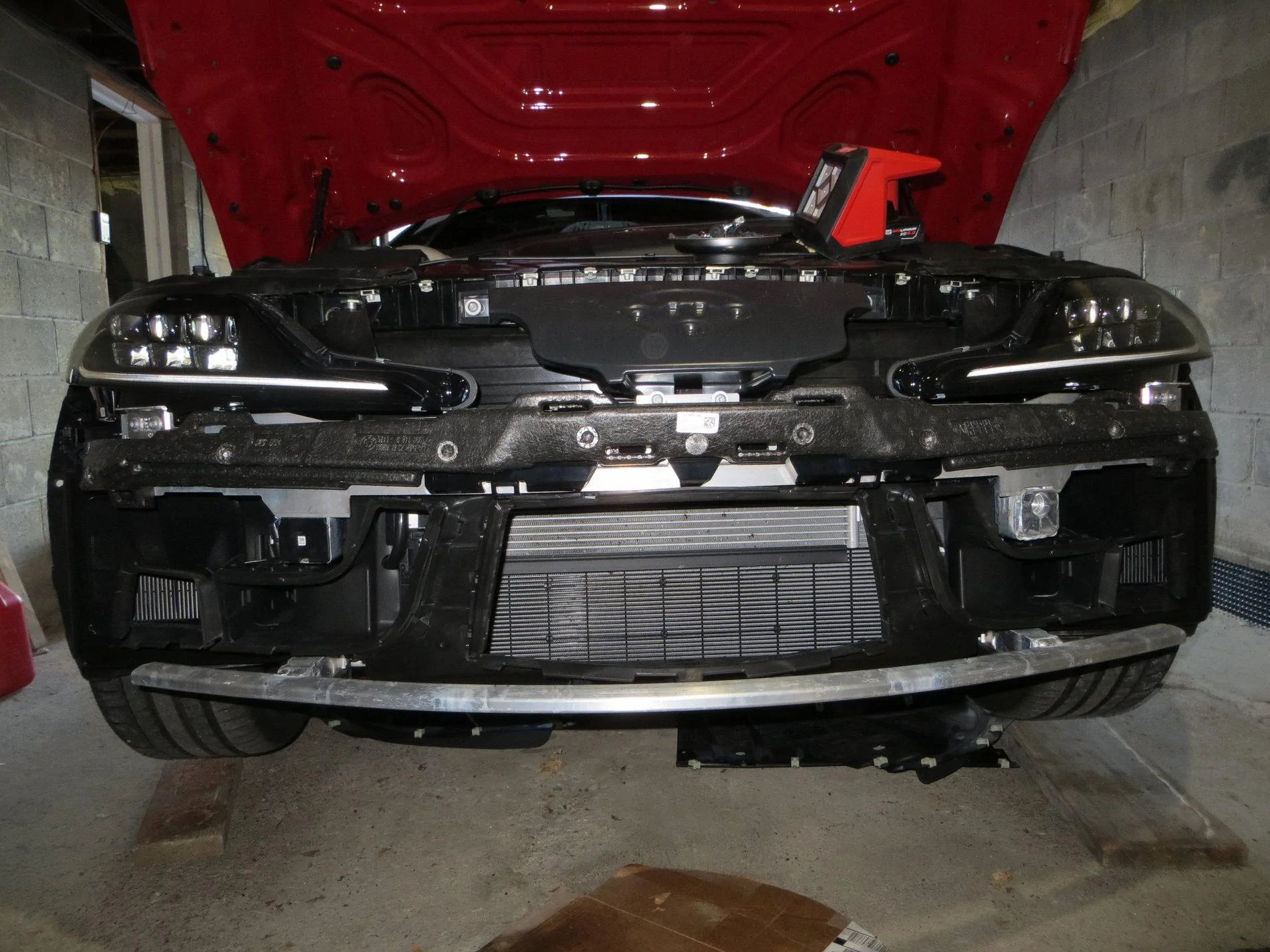
I considered not installing the scoop but we’re in very hot climate in AZ. The ram air scoop we made drops down 1” from the radiator cowl. The Supra has 3 inlets that feed into the radiator cowling, so for us the benefits of having fresh air to the intake duct outweighs the small area of air flow impeded.

How much air we’re getting is something we can’t measure. By monitoring our IAT’s just on local street daily driving we used to average 130F, after both mods were down to 118F. Data is consistent if you compare it in the logs at freeway speed prior to mods 122F starting IAT, after mods 111F starting IAT. Delta is 7-8F drop in IAT from street vs freeway speeds before and after the mods.

I’m sure you could cut into the cowling to let high pressure in and see a difference, but we opted to direct the air to the intake duct.. because racecar.

Stolen picture of the cowl/ducting for reference. You can see 3 inlets for the main radiator, and 2 for the auxiliary radiators.

09E3952C-F076-4AD7-B932-C1501DC2CC0F.webp
 
Last edited:

RaceReX

Well-Known Member
First Name
Rod
Joined
Mar 23, 2023
Threads
0
Messages
83
Reaction score
83
Location
Bay Area.NorCal
Car(s)
2022 3.0 Premium, 2009 SRF
I love projects like this. Thx for the share.

I wonder about the logic of covering the intake manifold like that. Wonder if the gains you see are just in the material used and how it protects the airbox. Rather than protecting the turbo. I've always thought the turbo is heating itself up to a billion degrees. So you're protecting the stove from the oven if you will.

Regarding the ram air. Wonder if you sacrafice any cooling due to sticking something in front of the heat exchanger. Additionally, how much "ram air" do you really pick up with the air going up and around and all that. It's positive pressure that's pushing the air through the tube just the same as without a tube. Is there some insulation property in the tube itself?

I might try a few variations to really understand the salient bits. Remove the scoop from in front of the heat exchanger. Might try without the snorkel at all. Change the shape of the heat shield to only protect the air box rather than the turbo.
Andrew,

in a forced induction car, Ram air does nothing at all. The turbo (or supercharger) will still boost to the same level regardless of how much air is being pushed into the inlet side (unless it’s starved from a pinched inlet.


on non forced induction cars, it helps, because, to a very small degree, it is acting like forced induction
 

suicidaleggroll

Well-Known Member
First Name
Adam
Joined
Mar 29, 2021
Threads
3
Messages
999
Reaction score
1,736
Location
Colorado
Car(s)
2021 Supra 3.0 Premium, 2012 WRX
in a forced induction car, Ram air does nothing at all. The turbo (or supercharger) will still boost to the same level regardless of how much air is being pushed into the inlet side (unless it’s starved from a pinched inlet.
Yes the manifold pressure will be the same, but that doesn't mean all is equal. The amount that the turbo heats up the air as it's being compressed depends on the air flow rate and the pressure ratio, that is Pout/Pin. Reducing pressure drop in the turbo inlet, or even creating a small amount of positive pressure via ram air, increases Pin and lowers the pressure ratio, reducing the amount that the turbo heats up the air as it compresses it. Essentially, it makes the turbo's job easier, which results in cooler charge temps and cooler IATs.

It's the same reason you can't just run higher boost at higher altitude to compensate for the lower atmospheric pressure. 10 psig at sea level is 24.7 psia in the manifold. At 10,000 ft the air pressure is 4.5 psi lower, so one might think you could just run 14.5 psig to get to the same 24.7 psia in the manifold and make the same power as at sea level, but you can't. 24.7 psia with 14.7 psia ambient is a pressure ratio of 1.68. 24.7 psia with 10.2 psia ambient is a pressure ratio of 2.42. The turbo is going to be operating in a completely different area of the compressor map at that pressure ratio and won't be able to flow as much air as at 24.7 psia at sea level. Even if you could hit that pressure, it would just be superheating the air.

Inlet pressure still matters for forced induction cars. Not as much as it does for naturally aspirated cars, but it's still important.
 

Awales74

Well-Known Member
First Name
Andrew
Joined
Apr 19, 2022
Threads
10
Messages
436
Reaction score
640
Location
Dallas Texas
Car(s)
Supra, Mazda 6
I dunno.

A 60mph wind produces about 14.4 pounds per square foot or only 0.1 pound per square inch.
(http://www.sussex.ac.uk/weatherstation/technical/Windforce.html). Even if it does what you believe it is, it only helps 0.1 pound and the OEM turbo is compressing anywhere from +10psi to +12psi. So it's not a lot of help at highway speeds.

We also know wind is caused by pressure difference. There's high pressure in front of the heat exchanger. There's negative pressure where the car is breathing in. You know there's a wind moving to the OEM inlet. I can't imagine it's any slower than through the tube. We know this path must exist or the car would choke and die within seconds.

But this is just one unlearned man's opinion. I'd love to see the test of your system without the scoop and without the tube. Just to know how much they contribute to your success.
 

garudathree

Well-Known Member
Joined
Jun 9, 2021
Threads
13
Messages
293
Reaction score
343
Location
ny
Car(s)
none
fyi, you can square off a 3" hose and it actually goes inside the intake ducting
if you need more pressure, you can block off the brake ducts. they do nothing for me on track.

all M cars are running this setup, with intake being fed from in front of the cooling stack. it's part of m340i's "hot climate package" as well.
 

suptj

Well-Known Member
First Name
TJ
Joined
May 21, 2023
Threads
11
Messages
70
Reaction score
34
Location
Arizona
Website
www.trackbuilt.co
Car(s)
A91
Yes the manifold pressure will be the same, but that doesn't mean all is equal. The amount that the turbo heats up the air as it's being compressed depends on the air flow rate and the pressure ratio, that is Pout/Pin. Reducing pressure drop in the turbo inlet, or even creating a small amount of positive pressure via ram air, increases Pin and lowers the pressure ratio, reducing the amount that the turbo heats up the air as it compresses it. Essentially, it makes the turbo's job easier, which results in cooler charge temps and cooler IATs.

It's the same reason you can't just run higher boost at higher altitude to compensate for the lower atmospheric pressure. 10 psig at sea level is 24.7 psia in the manifold. At 10,000 ft the air pressure is 4.5 psi lower, so one might think you could just run 14.5 psig to get to the same 24.7 psia in the manifold and make the same power as at sea level, but you can't. 24.7 psia with 14.7 psia ambient is a pressure ratio of 1.68. 24.7 psia with 10.2 psia ambient is a pressure ratio of 2.42. The turbo is going to be operating in a completely different area of the compressor map at that pressure ratio and won't be able to flow as much air as at 24.7 psia at sea level. Even if you could hit that pressure, it would just be superheating the air.

Inlet pressure still matters for forced induction cars. Not as much as it does for naturally aspirated cars, but it's still important.
Gosh you're so hot with your words. Good job very well written.
Sponsored


Top