Sponsored

Yet another oil thread

RGlbk1

Banned
Banned
Banned
First Name
Robert
Joined
Apr 23, 2025
Threads
0
Messages
103
Reaction score
36
Location
Northern New Jersey
Car(s)
2025 Toyota GR Supra
Did you really need to bump this 3 year old thread. You already posting in 2-4 of the OTHER oil threads wasn't enough?
Yeah, maybe someone will learn something valuable, before destroying their engine.
Appreciate the idiocy you are demonstrating.
Sponsored

 

itzTang

Well-Known Member
Joined
May 17, 2023
Threads
2
Messages
808
Reaction score
780
Location
Socal
Car(s)
2024 Supra 3.0
I am going to change and dump the factory oil at about 800 -1000 miles. Most of the engine break-in wear metals and ring seating should be almost complete and this will also remove factory assembly lubes, silicone sealants, and other contaminants that can damage the engine if they remain in there longer. Will fill with BMW LL-17 FE 0w-20 and drive for 2000 miles. After that I am planning on using a 5w-30 oil because I don’t really care about the USA’s mpg requirements, I think it’s called CAFE. I care about engine longevity and so I will be using the right oil, the right weight, and the right anti wear additive package, along with the right OCI, most likely around 5000 miles or yearly.
So what brand? And 5 reasons.
 

RGlbk1

Banned
Banned
Banned
First Name
Robert
Joined
Apr 23, 2025
Threads
0
Messages
103
Reaction score
36
Location
Northern New Jersey
Car(s)
2025 Toyota GR Supra
So what brand? And 5 reasons.
Valvoline European 5W-30 SN rated
Why?
1. Valvoline has spent billions+ in R&D developing engine oils.
2. The additive package anti wear additives are abundant and suitable for spirited driving.
3. There is no Moly in the oil. Not sure why, but BMW’s don’t like the MO which is a friction modifier.
4. There are less viscosity modifiers in 5w-30 than in 0w-30. Less viscosity modifiers allows for a heavier weight and amount of base oil and therefore more lubrication.
5. The 30 weight and additive package should provide a better cushioning layer of oil for the bearings than a 20 weight.
7. While the 30 weight oil is more viscous it is not expected to significantly increase the oil temperature thereby not increasing the amount of friction and associated loss in power.
8. The 5w-30 has a higher HTHS (High Temperature Low Shear) than the 0w-20. 3.5 vs 2.6.
9. Higher HTHS should provide longer OCI’s.
 

lucky phil

Well-Known Member
First Name
Phil
Joined
Jan 23, 2023
Threads
8
Messages
1,458
Reaction score
1,728
Location
Australia
Car(s)
Maybe a Supra GTS 2023 MT, Kia Stonic GT, Mazda CX5 GT SP
Valvoline European 5W-30 SN rated
Why?
1. Valvoline has spent billions+ in R&D developing engine oils.
2. The additive package anti wear additives are abundant and suitable for spirited driving.
3. There is no Moly in the oil. Not sure why, but BMW’s don’t like the MO which is a friction modifier.
4. There are less viscosity modifiers in 5w-30 than in 0w-30. Less viscosity modifiers allows for a heavier weight and amount of base oil and therefore more lubrication.
5. The 30 weight and additive package should provide a better cushioning layer of oil for the bearings than a 20 weight.
7. While the 30 weight oil is more viscous it is not expected to significantly increase the oil temperature thereby not increasing the amount of friction and associated loss in power.
8. The 5w-30 has a higher HTHS (High Temperature Low Shear) than the 0w-20. 3.5 vs 2.6.
9. Higher HTHS should provide longer OCI’s.
You forgot to mention the no LSPI protection and worse cam chain wear properties of "SN" V "SP" oils.
The advantage of SN+ oils are LSPI protection. The advantage of SP oils is LSPI protection and better cam chain wear protection.
SN oils are 2 generations old now.
Phil
 

RGlbk1

Banned
Banned
Banned
First Name
Robert
Joined
Apr 23, 2025
Threads
0
Messages
103
Reaction score
36
Location
Northern New Jersey
Car(s)
2025 Toyota GR Supra
Thanks for adding that in. The LSPI resulted in the reduction of the Calcium (a detergent) in the oil.

I would stick with the TOYOTA recommended SN grade oil and stay away from SP grade oils unless they are backwards compatible with SN and SL oils. SN+ oil was an interim grade oil while SP was written and tested.

SP was written to address LSPI , SAP’s, which destroy the catalytic converters and clog the particulate filters in the exhaust. Supra’s in the USA do not have particulate exhaust filters. And timing chain wear because car manufacturers don’t want to update the material, double row the chain, or modify the lubrication process. Sounds like the GM 6.2L disaster. Just change the oil and don’t address the root cause of bad engineering.

While SP grade oils have 1% or less SAP’s the SP grade oils also have significantly reduced amounts the critical anti wear additives zinc and phosphorus. Also responsible for rendering catalytic converters non- functional. From the few VOA’s I have looked at there is a 10-20% reduction in these anti-wear additives. It also appears some manufactures are adding more Boron into the oils to make up for the lower ZN and PO. I am in the process of understanding the increase of Boron in the oil.

Again, I would stay away from SP oils unless they are specifically labeled SP, SN+, SN and even SL. Or have a VOA in hand to compare to the SN grade.

New grade oils don’t necessarily mean they are better oils for the engine. In my opinion SN+, SP oils are not better for the engine, they address oil additive interactions with the catalytic converter and particulate exhaust filters, bad engineering, and the environment -so they say.
You forgot to mention the no LSPI protection and worse cam chain wear properties of "SN" V "SP" oils.
The advantage of SN+ oils are LSPI protection. The advantage of SP oils is LSPI protection and better cam chain wear protection.
SN oils are 2 generations old now.
Phil
Thanks for adding that in. The LSPI resulted in the reduction of the Calcium (a detergent) in the oil.

I would stick with the TOYOTA recommended SN grade oil and stay away from SP grade oils unless they are backwards compatible with SN and SL oils. SN+ oil was an interim grade oil while SP was written and tested.

SP was written to address LSPI , SAP’s, which destroy the catalytic converters and clog the particulate filters in the exhaust. Supra’s in the USA do not have particulate exhaust filters. And timing chain wear because car manufacturers don’t want to update the material, double row the chain, or modify the lubrication process. Sounds like the GM 6.2L disaster. Just change the oil and don’t address the root cause of bad engineering.

While SP grade oils have 1% or less SAP’s the SP grade oils also have significantly reduced amounts the critical anti wear additives zinc and phosphorus. Also responsible for rendering catalytic converters non- functional. From the few VOA’s I have looked at there is a 10-20% reduction in these anti-wear additives. It also appears some manufactures are adding more Boron into the oils to make up for the lower ZN and PO. I am in the process of understanding the increase of Boron in the oil.

Again, I would stay away from SP oils unless they are specifically labeled SP, SN+, SN and even SL. Or have a VOA in hand to compare to the SN grade.
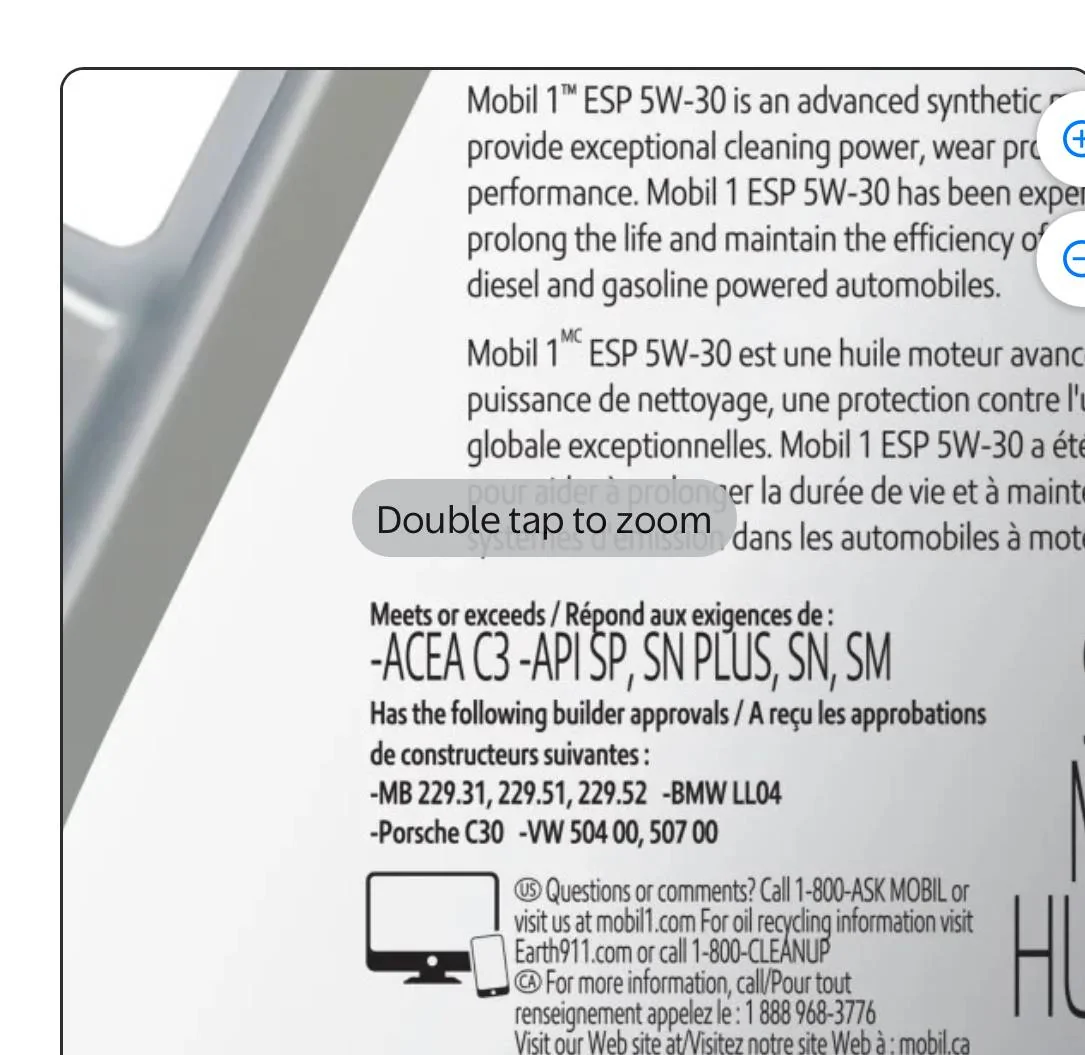
1748655758893-qn.webp
 
Last edited:

razorlab

Well-Known Member
First Name
Bryan
Joined
Oct 2, 2021
Threads
29
Messages
8,568
Reaction score
16,798
Location
Hudson Valley, NY
Car(s)
Not a Corvette.
Is this guy drunk? Lmao at the multiple “I’m smrt” copy-pasta’s in the same post and another thread.


Top