Sponsored

Low-cost Alternative to Intake Manifold???

If you could purchase a kit to lower IATs at a lesser cost than an intake manifold, what is fair?


  • Total voters
    56
  • Poll closed .

rottmore

Well-Known Member
Joined
Jan 17, 2024
Threads
3
Messages
491
Reaction score
815
Location
illinois
Car(s)
guess
Correct, although it is not tied into the A/C system. The GT4 cars tie the supplementary A2W IC into the engine engine cooling circuit rather than the low temp circuit. That is directly from a GT4 owner.

Agreed, a PWR core would be ideal. Funny enough i quite literally talked to someone at PWR today. But for a completely different industry lol
I must have misread his post. I thought they were running an 'interchiller' setup this whole time.
Thinking it over again, I also wouldn't discount wagner radiator cores either. If the price is right, they might be a more cost effective way to hit your price point, but good luck with those tariffs.
Sponsored


 

razorlab

Well-Known Member
First Name
Bryan
Joined
Oct 2, 2021
Threads
29
Messages
8,568
Reaction score
16,797
Location
Hudson Valley, NY
Car(s)
Not a Corvette.
Yea... I recall razorlab post those photos of the GT4 EVO2 using a small external A2W intercooler. If I remember correctly he mentioned it was tied to the A/C system. If you do get your mini A2W intercooler project going, I'd definitely go with a PWR core.
Factory Mani-cooler + Heat Exchanger is tied into the AC system. Hence why we do not have a traditional condensor/radiator for the AC.
 

i3igpete

Well-Known Member
Joined
May 16, 2022
Threads
44
Messages
1,254
Reaction score
1,484
Location
Chicago
Car(s)
2023 3.0L 8AT
The GT4 cars tie the supplementary A2W IC into the engine engine cooling circuit rather than the low temp circuit.
Huh, that a pretty neat design. Take it from 300+ to 220-ish using the higher flow capacity system, then use low flow capacity system to bring it down to ambient. Smart.

Hence why we do not have a traditional condensor/radiator for the AC.

1000018436.webp
 

rottmore

Well-Known Member
Joined
Jan 17, 2024
Threads
3
Messages
491
Reaction score
815
Location
illinois
Car(s)
guess
Someone send this man a high resolution metro-scan of the engine bay. Make sure to apply 2 coats of scan spray. You know...... for science.
 
OP
OP
rwense

rwense

Well-Known Member
Silver Sponsor
First Name
Evan
Joined
Dec 10, 2021
Threads
45
Messages
706
Reaction score
1,136
Location
Pittsburgh, PA
Car(s)
21 Nitro Yellow A90 Supra, 10 Honda Fit Sport 5spd
Bump for more votes
 

dAgent

Member
Joined
Feb 8, 2026
Threads
0
Messages
5
Reaction score
0
Location
USA
Car(s)
M340i
Additionally all heat exchangers on the market (except maybe PWR) are downgrades compared to OEM and have not proven to actually lower IATs. The reason is due to their construction. OEM cores are built with a copper/aluminum matrix whereas aftermarket cores are built solely with aluminum.

Thank you for reading and answering the poll I appreciate everyone's time :)
After market heat exchangers are a downgrade? Is that a fact about the copper/aluminum matrix as opposed to just aluminum, is that a BMW thing?

Man, I have been following and trying to learn about this new to me platform for a while, but this is the first time I'm hearing about heat exchangers being a downgrade. I've been watching a lot of shops and everybody in hot climates installing aftermarket heat exchangers on YT so this is very surprising to me especially since aftermarket heat exchangers are definitely an upgrade on most other platforms like my Corvette's radiator. Also, aren't heat exchangers upgrades mostly about a faster return to ambient after a pull rather than lower IAT's overall? a heat exchanger in the intake mani is what's responsible for lowering IAT's.
 
Last edited:

i3igpete

Well-Known Member
Joined
May 16, 2022
Threads
44
Messages
1,254
Reaction score
1,484
Location
Chicago
Car(s)
2023 3.0L 8AT
After market heat exchangers are a downgrade? Is that a fact about the copper/aluminum matrix as opposed to just aluminum, is that a BMW thing?

Man, I have been following and trying to learn about this new to me platform for a while, but this is the first time I'm hearing about heat exchangers being a downgrade.
https://www.podchaser.com/podcasts/...odes/real-ep-60-lets-talk-about-hea-212112300

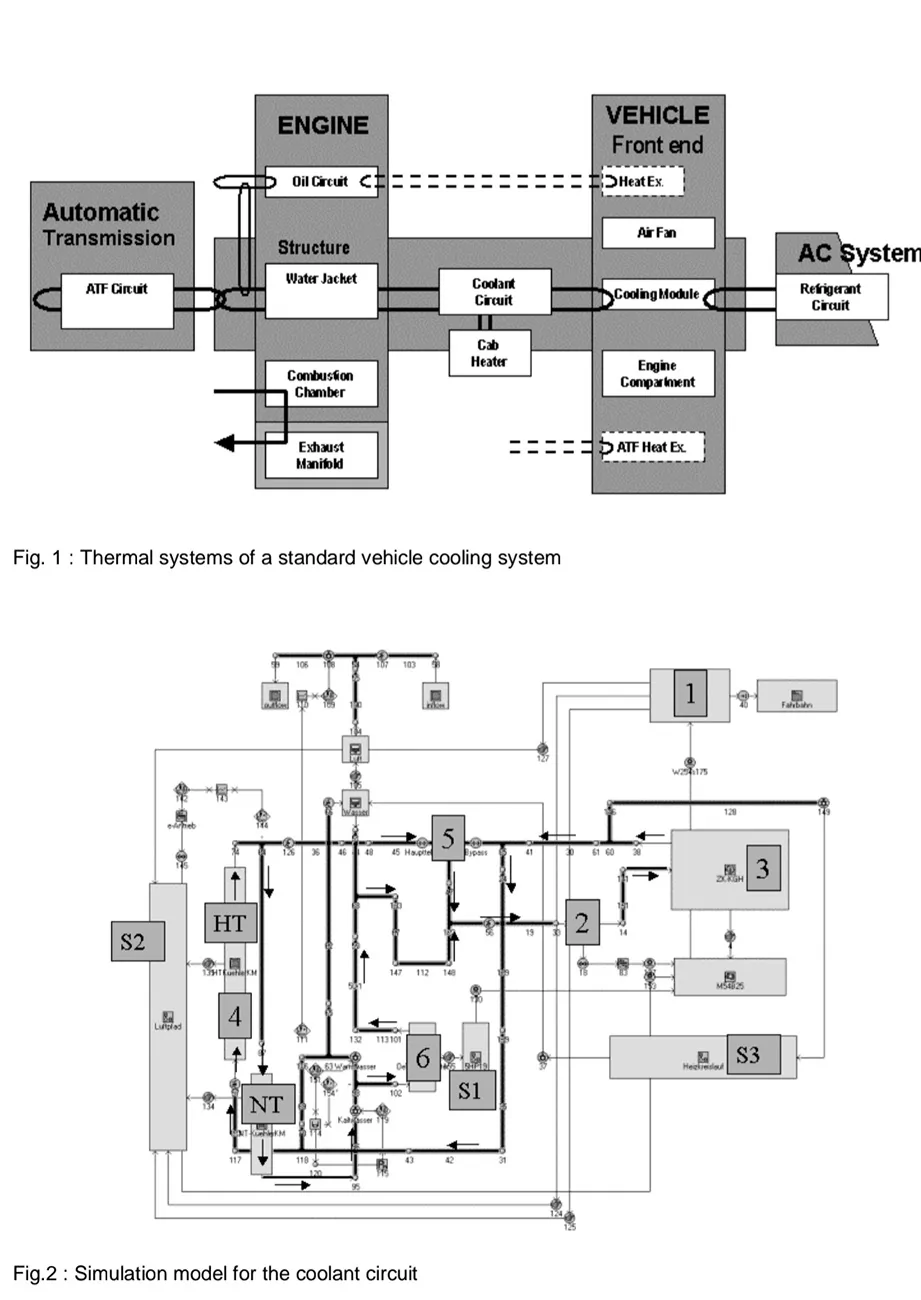
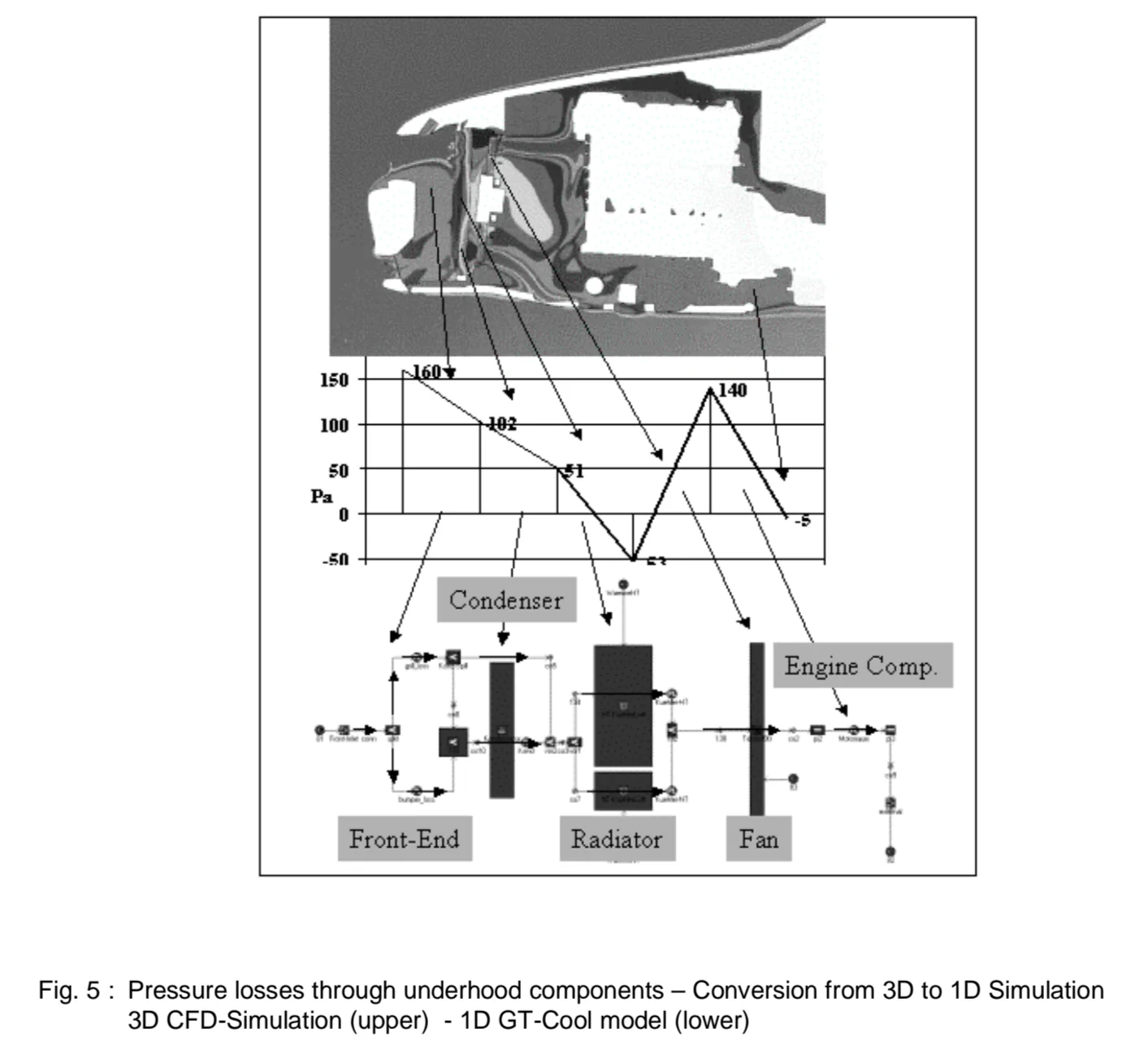
AFAIK, BMW has been doing system level cooling analysis longer than any other OEM. They published this back in 2001.

https://www.sae.org/papers/a-numeri...cooling-systems-2001-01-1722?src=2018-01-0387

1000018495.webp
1000018497.webp


it's also possible that aftermarket intercoolers/radiators have always had this problem (they call it the "Big Brick" Problem in the podcast) but we never had the instrumentation to easily prove or disprove it.
 
Last edited:

dAgent

Member
Joined
Feb 8, 2026
Threads
0
Messages
5
Reaction score
0
Location
USA
Car(s)
M340i
https://www.podchaser.com/podcasts/...odes/real-ep-60-lets-talk-about-hea-212112300

AFAIK, BMW has been doing system level cooling analysis longer than any other OEM. They published this back in 2001.

https://www.sae.org/papers/a-numeri...cooling-systems-2001-01-1722?src=2018-01-0387

1000018495.webp
1000018497.webp


it's also possible that aftermarket intercoolers/radiators have always had this problem (they call it the "Big Brick" Problem in the podcast) but we never had the instrumentation to easily prove or disprove it.

Interesting, I will listen to that podcast in my spare time.

Say, the stock heat exchanger or radiator craps out with its plastic end tanks and all.
If the aftermarket heat exchangers are a downgrade due to them being just aluminum as opposed the copper/aluminum matrix in the stock BMW heat exchangers? It would make sense to just put a stock new one back in for better performance, yet I don't think any performance minded people are actually doing that. They think it's the perfect time to do a heat exchanger upgrade, is it possible they are actually downgrading?

Anyone that knows anything about this please chime in.
 
OP
OP
rwense

rwense

Well-Known Member
Silver Sponsor
First Name
Evan
Joined
Dec 10, 2021
Threads
45
Messages
706
Reaction score
1,136
Location
Pittsburgh, PA
Car(s)
21 Nitro Yellow A90 Supra, 10 Honda Fit Sport 5spd
Interesting, I will listen to that podcast in my spare time.

Say, the stock heat exchanger or radiator craps out with its plastic end tanks and all.
If the aftermarket heat exchangers are a downgrade due to them being just aluminum as opposed the copper/aluminum matrix in the stock BMW heat exchangers? It would make sense to just put a stock new one back in for better performance, yet I don't think any performance minded people are actually doing that. They think it's the perfect time to do a heat exchanger upgrade, is it possible they are actually downgrading?

Anyone that knows anything about this please chime in.
Think about it this way, older cars (80s, 90s) didnt have nearly as many emissions regulations. So manufacturers could get away with much more in terms of efficiency.

In the last 10-15 years emissions regulations are infinitely more strict, and vehicles are making more and more power. Manufacturers suddenly need to find any way they can to eek out more efficiency to hit mpg goals and such. One of those ways is just simply spending more money on materials like a heat exchanger core. So its not necessarily just a bmw thing or just a euro thing. Im sure plenty of other manufacturers have copper/aluminum matrices in their heat exchangers

Its just like how bmws require the battery to be "coded" when you change it. You do that so the car knows it doesnt have to demand 100% charging capacity from the alternator all the time. Boom, instant efficiency. Its small % but they add up.
 

dAgent

Member
Joined
Feb 8, 2026
Threads
0
Messages
5
Reaction score
0
Location
USA
Car(s)
M340i
Think about it this way, older cars (80s, 90s) didnt have nearly as many emissions regulations. So manufacturers could get away with much more in terms of efficiency.

In the last 10-15 years emissions regulations are infinitely more strict, and vehicles are making more and more power. Manufacturers suddenly need to find any way they can to eek out more efficiency to hit mpg goals and such. One of those ways is just simply spending more money on materials like a heat exchanger core. So its not necessarily just a bmw thing or just a euro thing. Im sure plenty of other manufacturers have copper/aluminum matrices in their heat exchangers

Its just like how bmws require the battery to be "coded" when you change it. You do that so the car knows it doesnt have to demand 100% charging capacity from the alternator all the time. Boom, instant efficiency. Its small % but they add up.
Thanks for your input, appreciate it. Found the battery coding feature in my scanner, that was a wtf moment, but it did make sense.

I see, from your profile photo, You have experience with this platform road course racing; that's definitely the best stress test for both cooling systems. Have you tried any aftermarket heat exchangers as compared to the stock one? Any testing? What kind of cooling mods do you have on the car and what are the results you see as far as IAt's and colling temps?

I know my C6 Corvette even NA does get super-hot and larger mulit core radiators and aero do help a considerable amount; the frontal area of that car is small so not much space there for activities. No performance minded people would ever think about putting a stock rad back in that car after their plastic end tank start leaking.
Sponsored

 
Last edited:


Top