Sponsored

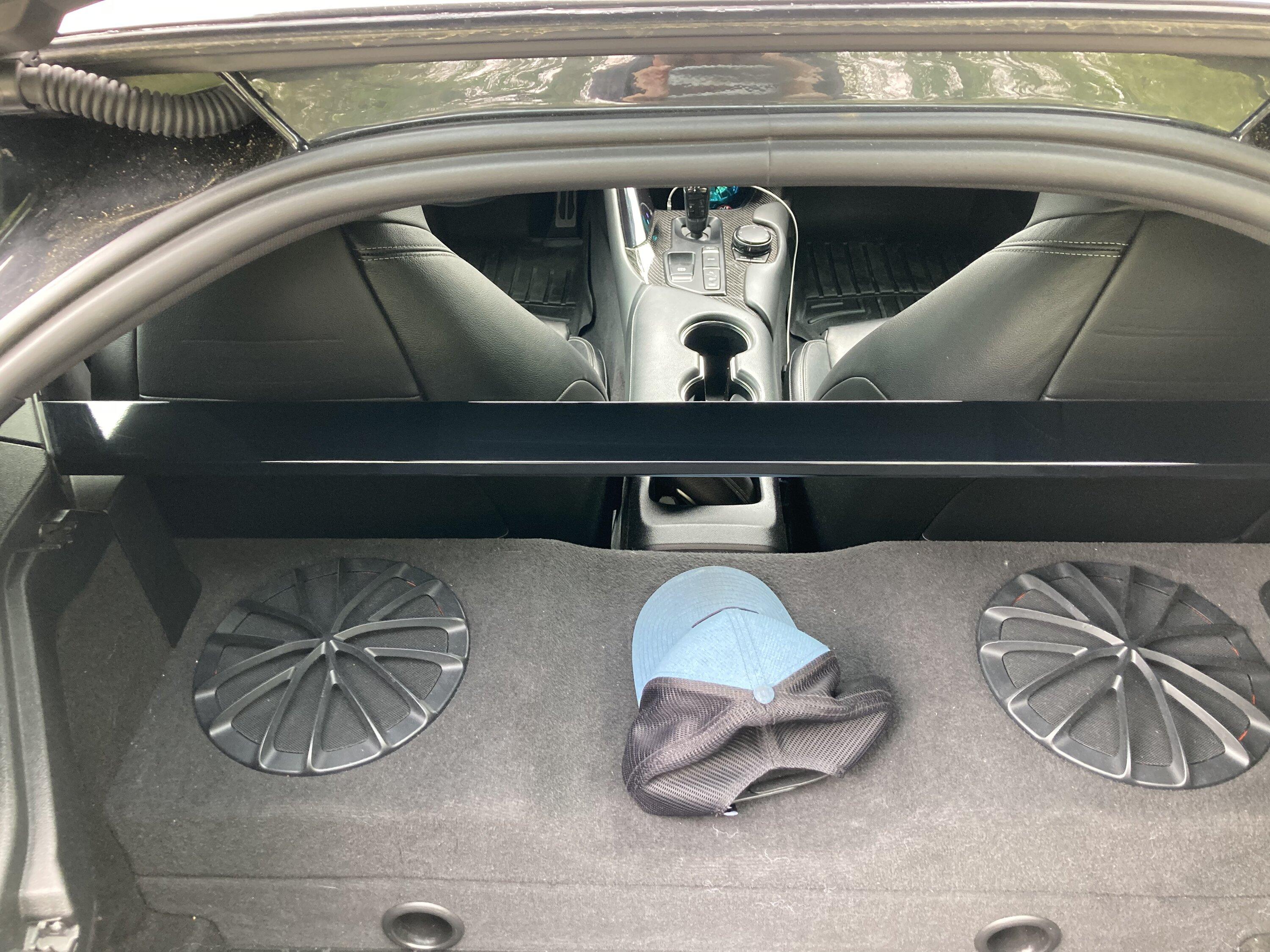
Has anyone switched this bar out?

RaceReX

Well-Known Member
First Name
Rod
Joined
Mar 23, 2023
Threads
0
Messages
83
Reaction score
83
Location
Bay Area.NorCal
Car(s)
2022 3.0 Premium, 2009 SRF
Qu
Potentially... The Cusco bar is definitely stiffer than the thin OEM piece, so under the right load it could in theory stiffen it up a bit, but the Supra already has a very stiff modern chassis and so theres no real reason to "upgrade" the stiffness unless you were doing a cage for an actual racecar. Toyota said that it's stiffer in rigidity than an LFA
quick question.


how do you know the Cusco bar is stiffer Than the stock bar?

and I hope you understand that the only difference that matters, as far as chassis rigidity, is tension and compression. Not torsional rigidity or shear modulus.

thanks,

rod s
Sponsored

 

dzeleski

Well-Known Member
First Name
Dylan
Joined
Nov 29, 2021
Threads
3
Messages
203
Reaction score
318
Location
LI, NY
Car(s)
2022 Supra, 2017 Tacoma
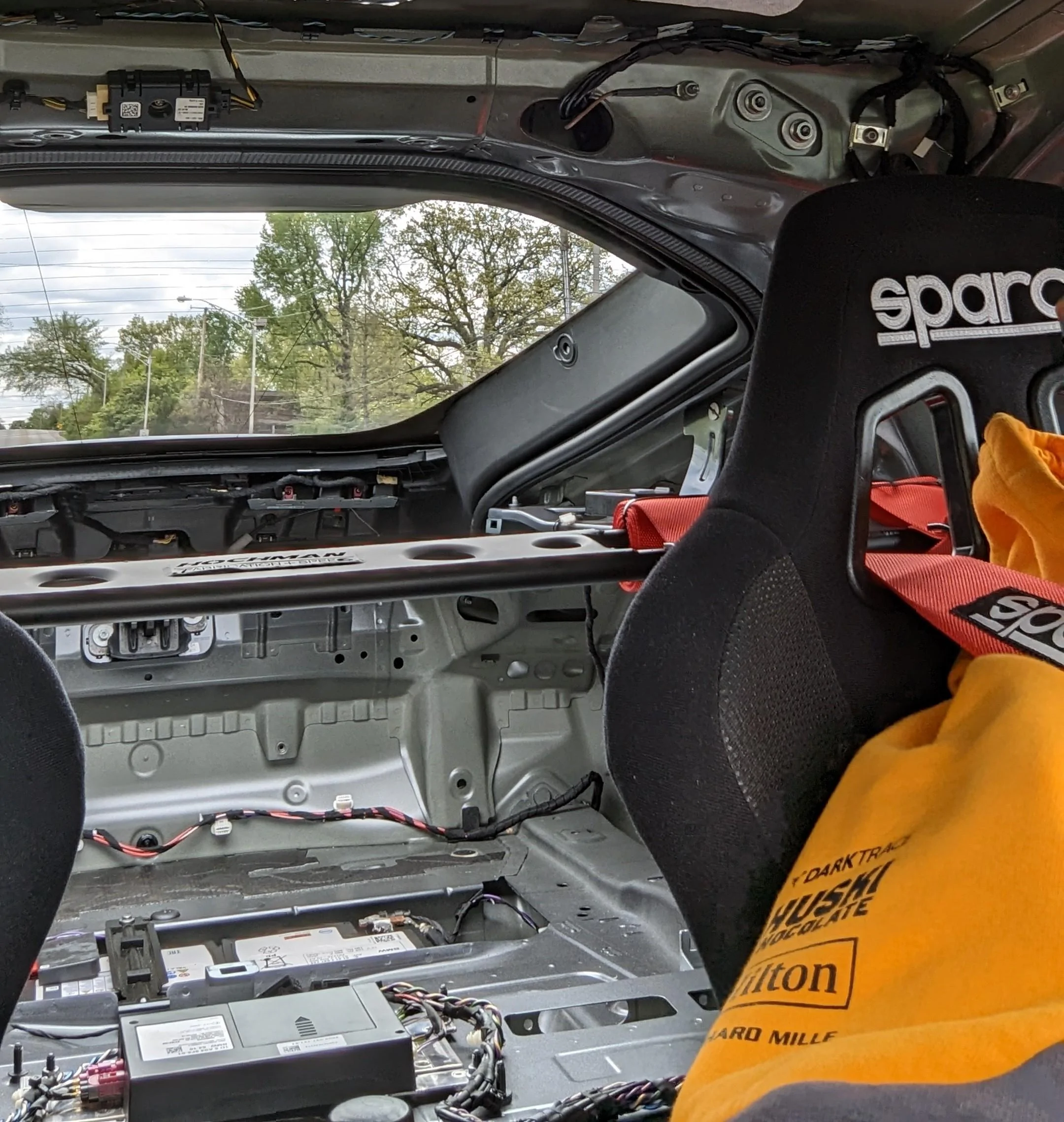
Why bother? I needed a place to attach harnesses due to the safety regs I'm working within and I like doing things the difficult and expensive way. I also wanted to see Ben's work because I'd like to convince him to take on a custom project (not the Supra but a Lemons car I'm considering building). I'm impressed with the quality of the component and the craftsmanship that came out of his shop. I'd recommend his product.

I personally don't like any of the roll bar options currently on the market for my application. They're made to be used with the interior still in the car, so from a space utilization perspective, you're losing a lot of it if you use something bolt-in. They're also outrageously expensive for what you're getting, or are produced by a foreign company, and freight to the US would be extremely costly. My path is a custom roll bar, and there's no one around here I would trust with the job, so I'm shopping around. I'm not going to let the car sit while I line something up.

I disagree with you about the mounting points not holding. You made the claim and I'd like to know your basis for it. There are thousands of these cars driving around counting on the harness bars being an effective safety device.
Call a reputable cage builder and ask them. They will say it’s not a good idea for a wide range of reasons.

Just because there are thousands of people doing this doesn’t make it a good idea. Many of these bars are only rated or tested to DOT standards(if they even test them), which is not even close to the same thing as SFI, ASN, KNAF, FIA, or NHRA specs. These parts won’t carry one of those ratings because they simply aren’t strong enough. Anyone that builds structural parts knows a straight line with a perpendicular load isn’t going be strong enough for an application like this and that’s why all cages use a collection of triangles supporting the direction of loads it’s designed to hold.

That being said the mounting point holding or not is just one of several issues with these bars. Call a cage builder and get their opinion if you don’t (rightfully) believe people on the internet.

edit: example of an honest part description: https://www.northstarmotorsports.co...ars/manufacturer/Brey+-+Krause/productID/1865
 

Pizza

Well-Known Member
First Name
Mitch
Joined
Mar 2, 2022
Threads
0
Messages
209
Reaction score
293
Location
Michigan, USA
Car(s)
2005 Mazda Rx-8, 2023 Nocturnal 3.0 Premium (MT)
Qu


quick question.


how do you know the Cusco bar is stiffer Than the stock bar?

and I hope you understand that the only difference that matters, as far as chassis rigidity, is tension and compression. Not torsional rigidity or shear modulus.

thanks,

rod s
The stock bar is aluminum, and the Cusco bar is steel. Generally steel has a higher yield strength and tensile strength than aluminum. It also has as a Young's modulus that's much higher than aluminum, making it much stiffer.

Obviously this may not directly translate to just popping in the bar and having a X percent stiffer chassis in that area, because we don't know how forces acting on the car translate to the bar, but the Cusco bar is stiffer. That's why I said it potentially could have an effect under the right load, but there's no performance based reason to actually do it.
 

JimmyA91

Well-Known Member
First Name
Jimmy
Joined
Dec 10, 2020
Threads
17
Messages
116
Reaction score
95
Location
Florida
Car(s)
A91 Soon & 2018 Ram
I filled mine with expanding foam because I couldn't get it to stop being the source of a rattle. Then wrapped it gloss black. Looks much better. I didn't like the holes it left when I removed it, as it likely helps very very very little, if at all.
Any pics? I wish someone made a block off plate. That thing is a rattle trap
 

D_A_S

Member
Gold Sponsor
First Name
Rich
Joined
Jun 19, 2022
Threads
0
Messages
19
Reaction score
20
Location
Race Tracks Near You!
Website
dotekiautosolutions.com
Car(s)
2021 GR
This is honestly crazy that people will jeopardize themselves to make their car look cooler.

I have seen two or three roll bars tops that are engineered correctly. Anything bolted to those stamped sheet metal parts that get pinch welded.... better go to church if you are putting your car on a fast paced track.

To say the material is stronger is even crazier as the supporting material it is bolted to will come right out in the event of a very bad high impact. Enough said here. The more expensive bars are engineered correctly for a particular reason. SAFETY!
 

BA9092

Well-Known Member
First Name
Christian
Joined
Aug 1, 2020
Threads
80
Messages
1,214
Reaction score
1,648
Location
Dallas/Fort Worth
Car(s)
2020 GR Supra Absolute Zero Premium
The 4 threaded bolt holes on the bar, are those standard 7/16" "seat belt bolt" threads?
 

i3igpete

Well-Known Member
Joined
May 16, 2022
Threads
44
Messages
1,254
Reaction score
1,485
Location
Chicago
Car(s)
2023 3.0L 8AT
The angles matter:
https://www.schrothracing.com/doc-share/ea_8-2_2019-04.pdf (page 8)

https://grassrootsmotorsports.com/articles/strap-how-properly-install-racing-harness/

All harnesses are designed to be mounted in specific ways, please read the instructions carefully.
While I agree with the logic of harness angle, I should point out that this is a SFI rule, and thus mainly apply to US racing bodies (NASCAR, NHRA, SCCA/NASA, etc).

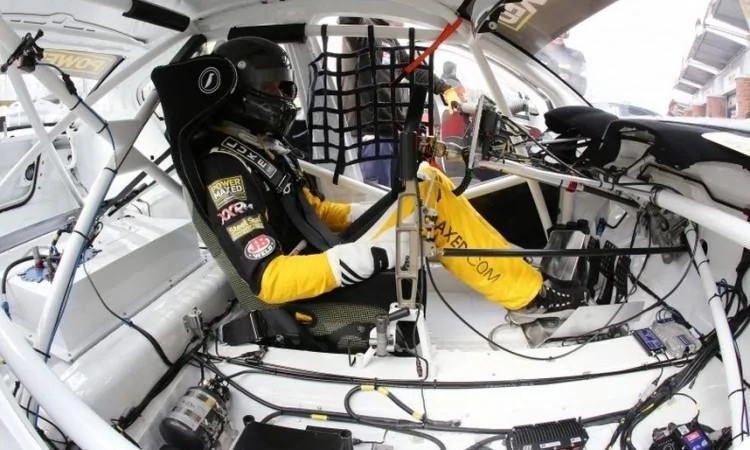
The most notable difference is that FIA does not regulate shoulder harness angle. This is why you see so many professional racing orgs in japan and europe that have very low shoulder harness angles. Puma GTO was in Super Taikyu, which is FIA. Sard Supra, Endless Skyline, Pennzoil Skyline and Calsonic Skyline were all JGTC (now SuperGT), which also followed FIA ruleset. I went on a deep dive on best motoring videos and gathered a bunch of screenshots into an album here awhile back:


BTCC is also FIA, and you can also see the low shoulder harness angle.

Josh-Cook-brands-2-e1428530359328.jpg


https://www.thecheckeredflag.co.uk/...tcc-the-rookies-explain-the-challenges-faced/


All that being said, I still installed my harnesses according to SFI spec, since I live in the US. But it's still interesting to know there are dissenting opinions on the topic, especially when that opinion comes from the highest motorsports org in the world.
 
Last edited:

dzeleski

Well-Known Member
First Name
Dylan
Joined
Nov 29, 2021
Threads
3
Messages
203
Reaction score
318
Location
LI, NY
Car(s)
2022 Supra, 2017 Tacoma
While I agree with the logic of harness angle, I should point out that this is a SFI rule, and thus mainly apply to US racing bodies (NASCAR, NHRA, SCCA/NASA, etc).

The most notable difference is that FIA does not regulate shoulder harness angle. This is why you see so many professional racing orgs in japan and europe that have very low shoulder harness angles. Puma GTO was in Super Taikyu, which is FIA. Sard Supra, Endless Skyline, Pennzoil Skyline and Calsonic Skyline were all JGTC (now SuperGT), which also followed FIA ruleset. I went on a deep dive on best motoring videos and gathered a bunch of screenshots into an album here awhile back:


BTCC is also FIA, and you can also see the low shoulder harness angle.

Josh-Cook-brands-2-e1428530359328.jpg


https://www.thecheckeredflag.co.uk/...tcc-the-rookies-explain-the-challenges-faced/


All that being said, I still installed my harnesses according to SFI spec, since I live in the US. But it's still interesting to know there are dissenting opinions on the topic, especially when that opinion comes from the highest motorsports org in the world.
I do not believe that is correct. FIA (prior to 2023) didn’t state an angle. But they did say you must follow the harness manufacturers instructions for mounting. I can’t tell what Hans type that btcc driving is wearing but I linked a pdf for the hybrid pro.

https://www.fia.com/sites/default/files/hybrid_fhr_guide_and_installation_specs.pdf#page9

As of 2023 they do specify an angle now. I can’t find a direct pdf on my phone but this source pulls the quotes.

https://www.frogracing.us/the-shop/harness-installation
 

razorlab

Well-Known Member
First Name
Bryan
Joined
Oct 2, 2021
Threads
29
Messages
8,568
Reaction score
16,797
Location
Hudson Valley, NY
Car(s)
Not a Corvette.
While I agree with the logic of harness angle, I should point out that this is a SFI rule, and thus mainly apply to US racing bodies (NASCAR, NHRA, SCCA/NASA, etc).

The most notable difference is that FIA does not regulate shoulder harness angle. This is why you see so many professional racing orgs in japan and europe that have very low shoulder harness angles. Puma GTO was in Super Taikyu, which is FIA. Sard Supra, Endless Skyline, Pennzoil Skyline and Calsonic Skyline were all JGTC (now SuperGT), which also followed FIA ruleset. I went on a deep dive on best motoring videos and gathered a bunch of screenshots into an album here awhile back:

Screenshot 2023-08-22 at 12.05.06 PM.png
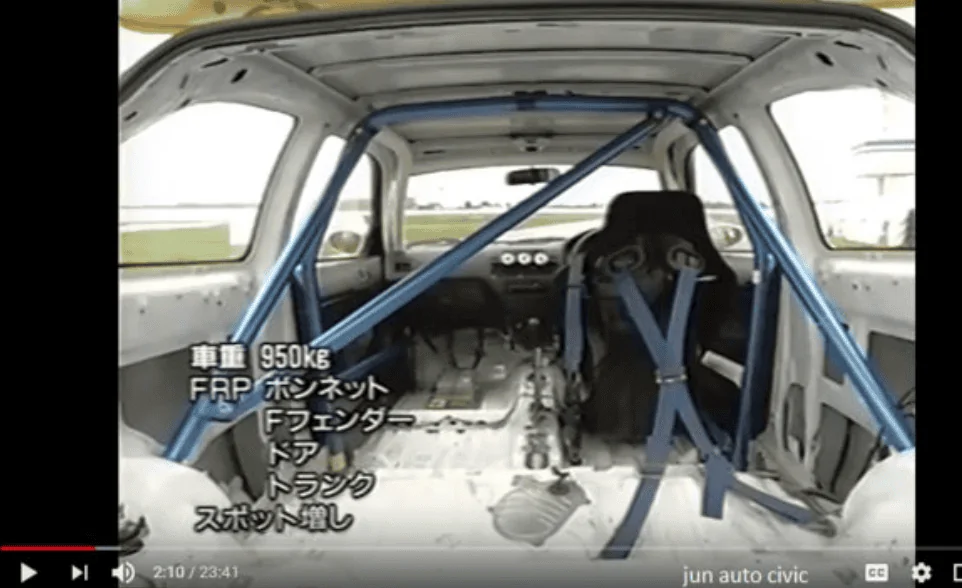
I don't think I would use that image for any safety reference. That main hoop doesn't have a lateral bar or a cross bar. That thing would only hurt you more than having nothing in a significant accident.

It's like saying helmets aren't needed and showing drivers on the Nurburgring driving 160mph without helmets to prove your point. ;)

Those Cusco death cages always make me laugh.
 

i3igpete

Well-Known Member
Joined
May 16, 2022
Threads
44
Messages
1,254
Reaction score
1,485
Location
Chicago
Car(s)
2023 3.0L 8AT
Note that album has 30+ images, including the fia spec cars I mentioned.
 

dzeleski

Well-Known Member
First Name
Dylan
Joined
Nov 29, 2021
Threads
3
Messages
203
Reaction score
318
Location
LI, NY
Car(s)
2022 Supra, 2017 Tacoma
Note that album has 30+ images, including the fia spec cars I mentioned.
Doesnt change the fact that they are all installed wrong. Some racing orgs have really good tech inspections and some dont. Most of those belts were takata:

https://www.hmsmotorsport.com/doc-share/ea_12-1_takata_2021-10_online.pdf
https://images.carid.com/takata-racing/products/pdf/70002us-0-installation-instructions.pdf
http://teinusa-blog.com/using-racing-harnesses/

Just because a bunch of people do it incorrectly without following the very specific manual that comes with the harness doesnt mean its correct. FIA has a drawing number: 253-42 which shows the angles and over the years it was updated from -45 to -20 acceptable, to -45 to -20 not recommended, to finally only stating 0 to -20 this year.

If you look at photo 9 in that album you can see that the harness is much higher then the drivers shoulders. There might be some seats that are legal to mount this way (which would stop the downward force on the spine) but many are not and it can cause seat failure during a crash from the loads in the downward direction (A fixed back seat will do better then an adjustable in this case). Generally this means the seat was not sized correctly to the person. An average street crash at 30mph is ~30g of force, or 5,500 pounds for an average weight person. Racing crashes are even higher, if you put a force somewhere it wasnt designed to be it will bend or break.

This is the comp doc I was looking for, this is their competion spec from 2017: https://www.fia.com/sites/default/files/hans_guide_and_instalation_spec.pdf

Its really simple. If you purchase safety equipment, read the manuals and install them correctly as a functioning group. If they arent followed, they will not work correctly.
Sponsored


Top